Sunday, 16 September 2012

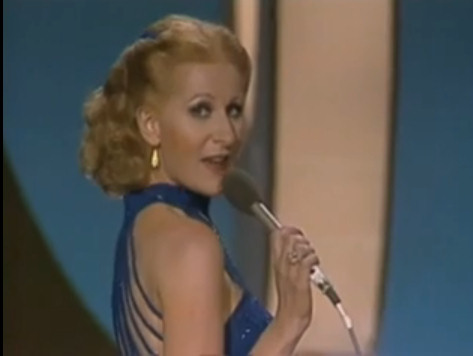
Eurovision Song Contest 1984

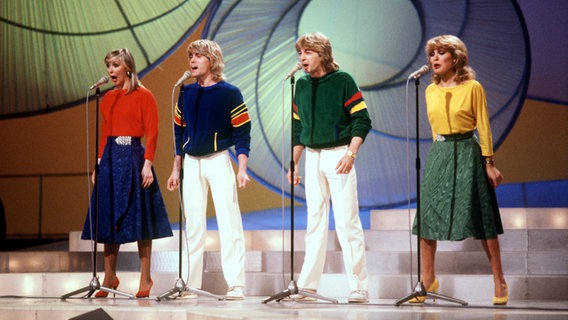
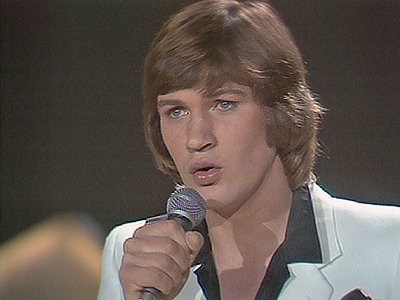
Herreys

Date: May 5, 1984
Venue: Grand Theatre, Luxembourg
Presenter: Désirée Nosbusch
Orchestra: Pierre Cao orchestra
Conductor: Pierre Cao
Director: René Steichen
Scruteneer: Frank Naef
Host broadcaster: RTL
Price presenter: Corinne Hermès
Interval act: Prague Theatre of Illuminated Drawings
Duration: 2 hours, 13 minutes
Number of entries: 19
Debuting countries: -
Returning countries: Ireland
Withdrawing countries: Greece, Israel
Winning Song: Diggi-Loo Diggi-Ley - Herreys, Sweden
Voting system: Each country awarded 12, 10, 8-1 points to their 10 favourite songs

Entries


01. Sweden: Herreys - Diggi-Loo Diggi Ley (1st place, 145 points)
02. Luxembourg: Sophie Carle - 100% d'amour (10 place, 39 points)
03. France: Annick Thoumazeau - Autant d'amoureux que d'étoiles (8th place, 61 points)
04. Spain: Bravo - Lady, lady (3rd place, 106 points)
05. Norway: Dollie de Luxe - Lenge leve livet (17th place, 29 points)
06. UK: Belle & the Devotions - Love games (7th place, 63 points)
07. Cyprus: Andy Paul - Anna Mari-Elena (15th place, 31 points)
08. Belgium: Jacques Zegers - avanti la vie (5th place, 70 points)
09. Ireland: Linda Martin - Terminal 3 (2nd place, 137 points)
10. Denmark: Hot Eyes - Det'lige det (4th place, 101 points)
11. The Netherlands: Maribelle - Ik hou van jou (13th place, 34 points)
12. Yugoslavia: Vlado & Isolda - Ciao, amore (18th place, 28 points)
13. Austria: Anita - Einfach weg (19th place, 5 points)
14. Germany: Mary Roos - Aufrecht geh'n (13th place, 34 points)
15. Turkey: Beş Yıl Önce, On Yıl Sonra - Halay (12th place, 37 points)
16. Finland: Kirka - Hengaillaan (9th place, 46 points)
17. Switzerland: Rainy Day - Welche Farbe hat der Sonnenschein (16 th place, 30 points0
18. Italy: Alice & Franco Battiato - I treni di Tozeur (5th place, 70 points)
19. Portugal: Maria Guinot - Silêncio e tanta gente (11th place, 38 points)
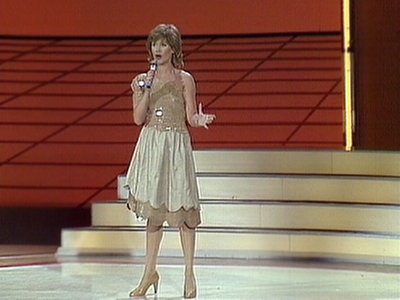
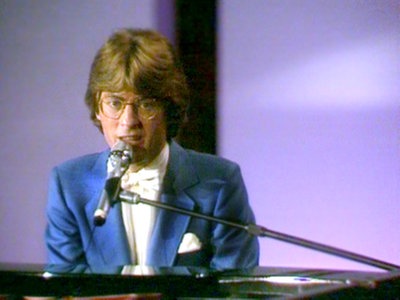
Mary Roos

The Eurovision Song Contest 1984 was the 29th Eurovision Song Contest and was held on 5 May 1984 in Luxembourg.

Format

In an introductory video at the start of the show, Pierre Cao and the RTL orchestra performed instrumental versions of all the past Eurovision winners from Luxembourg.

The presenter was Désirée Nosbusch. Nosbusch, only 19 years old at the time, hosted the show in a lax manner, which was quite unusual for this show back then. She manifested her fluency in four languages when she switched between English, French, German and Luxembourgish in the course of her speech, often in the same sentence.

Maribelle

The Herreys were the winners of this Eurovision with the song, Diggi-Loo Diggi-Ley. Their "golden shoes" have become a pop-cult classic since their win in 1984. The win was Sweden's second, and the first for a song performed in Swedish. The previous Swedish winner, Waterloo by ABBA in 1974, had been performed in English. Diggi-Loo Diggi-Ley was written by Torgny Söderberg and Britt Lindeborg.

The song Diggi-Loo Diggi-Ley is a perfect illustration of the time period in which it was performed; a very upbeat 1980s-style dance song, performed by three impossibly clean cut young men. Fellow Swedish Eurovision participant Tommy Körberg famously dubbed them the dancing deodorants in the press, a derogatory nickname that stuck with them for the rest of their career in their home country. The nonsensical title harking back to previous entries such as Boom Bang-a-Bang, Ding-A-Dong and La La La. The song has achieved considerable fame among Eurovision Song Contest fans, with a well-known archive of Contest lyrics using the domain name diggiloo.net, named after it. Despite the reception the song receives today, in the run-up to the Contest it was not an immediate favorite to win; bookmakers Ladbrokes had Ireland's "Terminal 3" and Italy's "I treni di Tozeur" as higher favourites, so the song winning came as a surprise to many.

According to author John Kennedy O'Connor's The Eurovision Song Contest - The Official History, The Herrey's opened the contest and thus became the third winners of the competition to sing from pole position, following Teach-In in 1975 and Brotherhood of Man in 1976. No song sung first has won since.

 Linda Martin

Participating countries

Israel withdrew from the contest due to a local memorial day commemorated on the same date. This year is also notable as one of the first contests where audible booing for an entry could be heard from the audience which occurred at the end of the UK's performance. It was said that the booing was due to English football fans causing damage in Luxembourg the year prior to the contest. However, the song itself managed a pretty good showing and reached 7th place.

Belle & the Devotions

Voting

Each country had a jury that awarded 12, 10, 8, 7, 6, 5, 4, 3, 2, 1 points for their top ten songs.

At the close of the penultimate jury's votes, there was only a difference of six points between Sweden and Ireland (141 and 135 respectively). However, Yugoslavia was the only country who had not given any points to Ireland and the last jury, Portugal, gave Ireland only 2 points, thus crushing their chances of winning. Portugal's voting also cost Denmark, who had been lying on a very strong 3rd position, and even leading the score board for a short time, its 3rd place, when Portugal's 12 lifted Spain from 94 to 106 points, while Portugal at the same time had only given Denmark one point making Denmark's total 101 points. Despite this, this was Denmark's best position in over 20 years.

Halfway through the voting, the scoreboard turned blue and remained blue until the end of the voting. Only television viewers could see the blue scoreboard

Returning artists

Three artists returned to the contest this year. Mary Roos represented Germany in 1972 and Izolda Barudžija was in 1982 member of the Yugoslav entry Aska and in 1983 she was a backing vocalist for Danijel, who performed for Yugoslavia.


Saturday, 15 September 2012

Eurovision Song Contest 1983

Corinne Hermès

Date: April 23, 1983
Venue: Rudi-Sedlmayer-Halle, Munich, West Germany
Presenter: Marlène Charell
Conductor: Dieter Reith
Director: Rainer Bertram
Scruteneer: Frank Naef
Host broadcaster: ARD
Price presenter: Albert Scharf, Nicole
Interval act: Song Contest ballet feat. Marlène Charell
Duration: 3 hours
Number of entries: 20
Debuting countries: -
Returning countries: France, Greece, Italy
Withdrawing countries: Ireland
Winning Song: Si La Vie Est Cadeau - Corinne Hermès, Luxembourg
Voting system: Each country awarded 12, 10, 8-1 points to their 10 favourite songs

Entries

01. France: Guy Bonnet - Vivre (8th place, 56 points)
02. Norway: Jahn Teigen - Do Re Mi (9th place, 53 points)
03. UK: Sweet Dreams - I'm never giving up (6th place, 79 points)
04. Sweden: Carola Häggkvist - Främling (3rd place, 126 points)
05. Italy: Riccardo Fogli - Per Lucia (11th place, 41 points)
06. Turkey: Çetin Alp & the Short Waves - Opera (19th place, 0 points)
07. Spain: Remedios Amaya - ¿Quién maneja mi barca? (19th place, 0 points)
08. Switzerland: Mariella Farré - Io così non ci sto (15th place, 28 points)
09. Finland: Ami Aspelund - Fantasiaa (11th place, 41 points)
10. Greece: Christie Stasinopoulou - Mou les (14th place, 32 points)
11. The Netherlands: Bernadette - Sing me a song (7th place, 66 points)
12. Yugoslavia: Danijel - Džuli (4th place, 125 points)
13. Cyprus: Stavros & Constantina - I agapi akoma zi (16th place, 26 points)
14. Germany: Hoffmann & Hoffmann - Rücksicht (5th place, 94 points)
15. Denmark: Gry Johansen - Kloden drejer (17th place, 16 points)
16. Israel: Ofra Haza - Hi (2nd place, 136 points)
17. Portuga: Armando Gama - Esta balada que te dou (13th place, 33 points)
18. Austria: Westend - Hurricane (9th place, 53 points)
19. Belgium: Pas de Deux - Rendez-vous (18th place, 13 points)
20. Luxembourg: Corinne Hermès - Si la vie est cadeau (1st place, 142 points)

The Eurovision Song Contest 1983, the 28th in the series, was held in Munich, then West Germany, on April 23, 1983. The presenter was Marlène Charell. Corinne Hermès was the winner of this Eurovision with the song, Si la vie est cadeau which was written by Jean-Pierre Millers and Alain Garcia. This was Luxembourg's fifth victory in the contest which equalled the record set by France in 1977. It was also the second year in a row where the winning entry was performed last on the night and the second year in a row in which Israel won 2nd place.

 Bernadette

Format

At the beginning of the show Marlène Charell introduced each act and called all of them on stage together.

The set that year was rather peculiar, with a quite small, arc-shaped stage surrounding the orchestra section, and a large background resembling giant electric heaters, which lit up in different sequences and combinations depending on the nature and rhythm of the songs. This year's contest was the first to be televised in Australia, via Channel 0/28 (now SBS Television) in Sydney and Melbourne, although that country is never allowed to participate. Nevertheless, previous winners ABBA and Bucks Fizz had been successful in Australia, to which many Europeans had emigrated. Ireland was not in the contest because RTÉ was in strike action at that time.

Voting

Toward the end of the voting, it became evident that Luxembourg was going to win, but early on, Germany, Sweden, and Yugoslavia all threatened to take Luxembourg's lead, which they earned halfway through the jury vote. At one point, murmurs and boos arose from the crowd at the Greek jury's decision to give host country Germany only one point. And that was the only occasion that La Grèce didn't award any point to Chypre.

 Ami Aspelund

Language troubles
Due to Charell's choice to announce points in three languages instead of two, the voting went on for nearly an hour, stretching the Eurovision contest past three hours for the first time ever. In addition, Charell made 13 language mistakes throughout the voting, some as innocuous as mixing up the words for "points" between the three languages, some as major as nearly awarding points to Schweden (Sweden) that were meant for Schweiz (Switzerland).

The language problems also occurred during the contest introductions, as Charell introduced Norwegian conductor Sigurd Jansen as ...Johannes...Skorgan..., having been forced to make up a name on the spot after forgetting the conductor's name.

Guy bonnet

Song success

Ofra Haza from Israel, who took the second place, had an enduring success with her song Hi which became a hit in Europe, launching her career. This year also marked the first performance of Sweden's Carola Häggkvist, who took the third place and went on to win the contest in 1991 and represented her country again in 2006 (coming fifth). Her song, Främling, became very popular in Sweden and in various other European countries. In the Netherlands, the song reached the top five, coupled with a Dutch language version (Je ogen hebben geen geheimen) which was performed by Carola herself. The 4th placed Džuli, also became a hit in Europe. Singer Daniel released an English language version as Julie.

Nul points

This year's nul points were shared by Spain and Turkey. Spain's Remedios Amaya presented a song which was a stark departure from pop tastes and conventional perception of melody and harmony as it was a flamenco one, a style traditionally tied with the international image of Spain. Additionally, she sang her song barefoot. Some olés were heard from the present audience when she ended her performance. Turkey's entry, Opera, performed by Çetin Alp & the Short Waves, could on the other hand be said to fit in well with the spirit of Eurovision of that time. Nevertheless, the overinterpretation of the theme of the song, as well as the fact that the lyrics of the song consisted for the most part of the often-repeated word opera and names of well-known operas and composers, and Çetin's breaking into operatic lay lay la, prompted extensive derision of the song, including the usual sardonic words from BBC commentator Terry Wogan (a nicely understated performance there).

Interval act

The interval show was a dance number set to a medley of German songs which had become internationally famous, including Strangers in the Night. The host, Marlène Charell, was the lead dancer.

Returning artists

Guy Bonnet represented France in 1970 and JahnTeigen participated for Norway in 1978 and 1982.

Eurovision Song Contest 1982

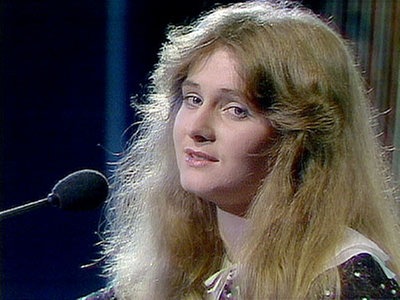
 Nicole

Date: April 24, 1982
Venue: Harrogate International Centre, Harrogate, United Kingdom
Presenter: Jan Leeming
Conductor: Ronnie Hazlehurst
Director: Michael Hurll
Scruteneer: Frank Naef
Host broadcaster: BBC
Price presenter: Sir Ian Trethowen
Interval act: Pictures from Yorkshire and Castle Howard
Duration: 2 hours, 11 minutes
Number of entries: 18
Debuting countries: -
Returning countries: -
Withdrawing countries: France, Greece
Winning Song: Ein bißchen Frieden - Nicole, Germany
Voting system: Each country awarded 12, 10, 8-1 points to their 10 favourite songs

Entries

01. Portugal: Doce - Bem bom (13th place, 32 points)
02. Luxembourg: Svetlana - Cours après le temps (6th place, 78 points)
03.
orway: Jahn Teigen and Anita Skorgan - Adieu (12th place, 40 points)
04. UK: Bardo: One step further (7th place, 76 points)
05. Turkey: Neço - Hani (15th place, 20 points)
06. Finland: Kojo - Nuku pommiin (18th place, 0 points)
07. Switzerland: Arlette Zola - Amour on t'aime (3rd place, 97 points)
08. Cyprus: Anna Vissi - Moni i agapi (5th place, 85 points)
09. Sweden: Chips - Dag efter dag (8th place, 67 points)
10. Austria: Mess - Sonntag (9th place, 57 points)
11. Belgium: Stella - Si tu aimes ma musique (4th place, 96 points)
12. Spain: Lucia - El (10th place, 52 points)
13. Denmark: Brixx - Video video (17th place, 5 points)
14. Yugoslavia: Aska - Halo, Halo (14th place, 21 points)
15. Israel: Avi Toledano - Hora (2nd place, 100 points)
16. The Netherlands: Bill van Dijk - Jij en ik (16th place, 8 points)
17. Ireland: The Duskeys - Here today gone tomorrow (11th place, 49 points)
18. Germany: Nicole - Ein bißchen Frieden (1st place, 161 points)

Kojo

The Eurovision Song Contest 1982 was the 27th Eurovision Song Contest and was held on April 24 1982 in Harrogate, North Yorkshire, United Kingdom. The presenter was Jan Leeming. The opening of the contest showed a map of Europe, with the translation "Where is Harrogate?" popping up on-screen from the languages of the various countries. Then the map zoomed into Harrogate's location in Yorkshire, followed by an introduction video spotlighting the town.


The German entrant, Nicole, was the winner of this contest with the song, Ein bißchen Frieden. Germany got 1.61 times as many points as runner-up Israel, which was a record under the current scoring system until 2009, when Norway got 1.78 times as many points as Iceland. The song also cemented Ralph Siegel and Bernd Meinunger, the song's composers, into German Eurovision tradition, writing 18 Eurovision songs between them before and after Ein bißchen Frieden, 13 of which were for Germany.

 Bardo

Format

This was the first time that Germany won the contest. It has competed every year since the contest's inception. Germany won again in 2010, twenty-eight years after their first win.

The most notible thing about the other entries was that they were all performed by acts with short names. Twelve of the performers had one-word names, and five of those names haf only four letters in them. The song titles ranged from the two letters of the Spanish El, through Israel's second-placed Hora and Turkey's Hani to Ireland's Here today gone tomorrow, the longest title at just twenty-one letters.

The Dutch entry Jij en ik was written by Dick Bakker, who had won in 1975 with Ding-A-Dong. Jij en ik came only 16th.

Bill van Dijk

Voting structure

Each country had a jury who awarded 12, 10, 8, 7, 6, 5, 4, 3, 2, 1 points for their top ten songs.

Germany had the advantage of performing last. After coming second in 1980 and second in Dublin the year previously, Ralph Siegel and Bernd Meinunger took the first Grand Prix for Germany. The winner, Nicole, beat the nearest competition by 61 points and over 13 million West Germans watched her victory on television. Germany was the commanding leader for nearly the entire voting process.

Nicole went on to sing the reprise of her song in English, French and Dutch, as well as German, to the delight of the invited audience in Harrogate Conference Centre who stood to applaud her. The English version of her Eurovision winner, A Little Peace, subsequently shot to No1 in the UK Singles Chart.

Participating countries 

Greece was due to participate in the contest with the song Sarantapente Kopelie performed by Themis Adamantidis. Although drawn to perform in second place, ERT withdrew the entry a few weeks before the contest.

After coming 3rd in 1981, the French declared that the contest was a monument to drivel and refused to take part.

Doce

Returning artists

Seven artists returned to the contest this year. Stella Maessen, performing for Belgium, represented the Netherlands in 1970 as a member of Patricia and Hearts of Soul and in 1977 she represented Belgium as a member of Dream Express. Anna Vissi, who represented Cyprus, performed for Greece in 1980. Anita Skorgan participated in 1977 and in 1979 before performing in 1982 for Noway together with Jahn Teigen, who came last on behalf of Norway in 1978. Fatima Padinha and Teresa Miguel, both member of the Portuguese group Doce, were also members of the Portuguese entry in 1978, Gemini. Sally Ann Triplett, member of Bardo, represented the UK in 1980 as a member of Prima Donna. 


Friday, 14 September 2012

Yvetta Simonová

Yvetta Simonová

Yvetta Simonová, (born on November 4, 1928 in Brod, Czech) is a Czech singer. She is a star of Czech popular music, she first began to sing as an operetta and musical singer in Bratislava and in the Musical Theatre in Karlin. Only later she became a singer of popular songs.

After graduating from business school Yvetta privately studied music and singing. Her artistic career began as an operetta and musical singer. Later, she began collaborating with dance orchestras Zdenek Bartak and J. Prochazka. Since 1958 she collaborates with the Karel Vlach Orchestra as its main singing star. In her life he sang over 500 songs, a number of them with her longtime colleague, singer Milan cool. In the 1960s she was quite popular, and at that time she made ​​a large number of well-known songs to this day, she performed frequently on radio and television. Yvetta is still active and in music. During her career Yvetta covered many ESC songs.

Wednesday, 12 September 2012

Eurovision Song Contest 1981

Bucks Fizz

Date: April 4, 1981
Venue: RDS Simmonscourt Pavilion, Dublin, Ireland
Presenter: Doireann Ní Bhriain
Orchestra: RTÉ concert orchestra
Conductor: Noel Kelehan
Director: Ian McGarry
Scruteneer: Frank Naef
Host broadcaster: RTÉ
Price presenter: Johnny Logan, Shay Healy
Interval act: Planxty with Timedance danced by Dublin City Ballet
Duration: 2 hours, 32 minutes
Number of entries: 20
Debuting countries: Cyprus
Returning countries: Israel, Yugoslavia
Withdrawing countries: Italy, Morocco
Winning Song: Making Your Mind Up - Bucks Fizz, UK
Voting system: Each country awarded 12, 10, 8-1 points to their 10 favourite songs

Entries

01. Austria: Marty Brem - Wenn du da bist (17th place, 20 points)
02. Turkey: Modern Folk Trio and Ayşegül - Dönme Dolap (18th place, 9 points)
03. Germany: Lena Valaitis - Johnny Blue (2nd place, 132 points)
04. Luxembourg: Jean-Claude Pascal - C'est peut-être pas l'Amérique (11th place, 41 points)
05. Israel: Hakol Over Habibi - Halayla (7th place, 56 points)
06. Denmark: Tommy Seebach & Debbie Cameron - Krøller eller ej (11th place, 41 points)
07. Yugoslavia: Seid Memić "Vajta" - Lejla (15th place, 35 points)
08. Finland: Riki Sorsa - Reggae OK (16th place, 27 points)
09. France: Jean Gabilou - Humanahum (3rd place, 125 points)
10. Spain: Bacchelli - Y sólo tú (14th place, 38 points)
11. The Netherlands: Linda Williams - Het is een wonder (9th place, 51 points)
12. Ireland: Sheeba - Horoscopes (5th place, 105 points)
13. Norway: Finn Kalvik - Aldri i livet (20th place, 0 points)
14. UK: Bucks Fizz - Making your mind up (1st place, 136 points)
15. Portugal: Carlos Paião - Playback (18th place, 9 points)
16. Belgium: Emly Starr - Samson (13th place, 40 points)
17. Greece: Yiannis Dimitras - Feggari kalokerino (8th place, 55 points)
18. Cyprus: Island - Monika (6th place, 69 points)
19. Switzerland: Peter, Sue and Marc - Io senza tei (4th place, 121 points)
20. Sweden: Björn Skifs - Fångad i en dröm (10th place, 50 points)

Linda Williams

The Eurovision Song Contest 1981 was held in Dublin.  United Kingdom's Bucks Fizz were the winners of this Eurovision with the song Making Your Mind Up, beating Germany into second place by a mere four votes. This year is remembered for the performance of this British band, which included a dance-routine where the two male members ripped the skirts off the two female members only to reveal smaller skirts, and today stands as one of the defining moments of the contest's history. Making your mind up was written by Andy Hill and John Danter.

Production

Having won the year before, Ireland hosted the 1981 contest - the second time they had done so. As in 1971, the 1981 Eurovision Song Contest was produced by the country's broadcaster RTE. The presenter was Doireann Ni Bhriain, who was well known in Ireland at the time as a TV presenter and for the current affairs radio show Women Today. She was chosen due to her being bilingual in Irish and English as well as having studied French, which she spoke with some ease.

The contest took place under heavy guard at the 15000 seat Simmonscourt Pavilion of the RDS, which was normally used for agricultural and horse shows. Over 250 armed soldiers and police were on hand to protect against any likely political demonstrations. It cost RTÉ over £300,000 to stage, although this included £110,000 from the EBU. From this, the Irish Government expected to make around £2,000,000 from tourism as a result of staging the show. The RDS would go on to host the next Irish Eurovision production in 1988.


Lena Valaitis

Entrants

This was the debut year of Cyprus in the contest, who finished sixth. Returning to the contest was Israel, who did not compete the previous year, despite winning the two years previous to that. They finished seventh. Yugoslavia also returned to the competition after a five year absence. Italy withdrew for the first time from the contest, due to lack of interest, while Morocco declined to take part after their sole entry the year before.

Of the performers, many previous contestants returned to the contest this year. Notably, Jean-Claude Pascal for Luxembourg, who had won the contest 20 years earlier, although could only manage 11th place this time. Repeated entrants Peter, Sue and Marc returned for the fourth time, after 1971, 1976 and 1979. Performing again for Switzerland, they remain the only act to sing in four different languages (French, English, German and this time, Italian). Other returnees were Marty Brem who had taken part the year before for Austria, Tommy Seebach for Denmark, and Björn Skifs for Sweden. Bucks Fizz member, Cheryl Baker had performed in 1978 with the band Co-Co for the UK, while Sheeba member Maxi had performed as a solo artist in 1973 for Ireland.

The 46-piece Irish TV orchestra didn't have a saxophone as they didn't consider it an orchestral instrument, which caused great concern with the United Kingdom entry as a saxophone appeared heavily on their song. Andy Hill – the producer of the single - said that had they known, they would have dropped one of the two backing singers to be replaced by a saxophonist, there being two on the actual recording.

Sheeba

Interval

The interval act was traditional Irish band Planxty, who performed the lengthy piece Timedance, which depicted Irish music through the ages. The dancers were from Dublin City Ballet with choreography by Iain Montague. This is seen as a precursor to Riverdance, which became famous after its performance in 1994. The song, which was written by Bill Whelan, went on to be released as a single and became a No.3 hit in the Irish charts.

This mix of past and present was also the theme to the contest's opening montage, which featured shots of Celtic ruins, cliffs and castles, edited together with close-ups of art, aeroplanes, architecture and horse races.

Voting

The voting proved to be memorable for its closeness. The UK won by four points, but leading up to this, five countries took pole position at various stages: UK, Germany, France, Switzerland and Ireland. At the other end of the board was Norway, who finished last with no points for the second time in Eurovision history.

Other memorable moments included a glitch in the scorekeeping, giving host country Ireland 310 extra points instead of the 10 designated by the Luxembourg jury. Also of note, when host Doireann Ní Bhriain attempted to collect Yugoslavia's votes, after repeated attempts to contact them, Yugoslavia's spokeswoman, Helga Vlahović, who went on to present the 1990 contest, finally answered the phone and abruptly answered I don't have it, causing laughter to erupt from the audience.

Tommy Seebach & Debbie Cameron

Aftermath

Runner-up Lena Valaitis was in good spirits while talking to the press following the contest and largely unconcerned about losing. Swedish singer Bjorn Skifs however was more outspoken saying; This was not a song contest, it was a show – all these dancing girls, they take away from the songs. I also think there should be a change in the rules to allow us to sing in English. Then we would really be able to compete. Harold Tusberg, head of light entertainment for Norwegian television was upbeat about Norway's 'nul points' result as he claimed that their entry would be remembered above many others; Who remembers who came second or third – people will remember us!. Finn Kalvik himself conceded graciously saying that he had enjoyed the week's holiday.

Following this year's contest, France withdrew from competing the following year, with the broadcaster announcing that the songs were a monument to drivel. Indeed, many comments had been made regarding the quality of the winning group's performance indicating that the song had most likely won by style over substance. Either way, Bucks Fizz went on to have a lasting chart career over the next few years, and became one of the top-selling groups of the 1980s in the UK. The winning song itself reached No.1 in nine countries and became a top ten hit in nations such as Australia, New Zealand and South Africa, selling four million copies worldwide.


Tuesday, 11 September 2012

Eurovision Song Contest 1980

Johnny Logan 

Date: April 19, 1980
Venue: Congresgebouw, The Hague, Netherlands
Presenter: Marlous Fluitsma
Orchestra: Metropole Orchestra
Conductor: Rogier van Otterloo
Director: Theo Ordeman
Scruteneer: Frank Naef
Host broadcaster: NOS
Price presenter: Marcel Besançon
Interval act: The Dutch rhythm steel & show band
Duration: 2 hours, 16 minutes
Number of entries: 19
Debuting countries: Morocco
Returning countries: Turkey
Withdrawing countries: Israel, Monaco
Winning Song: What's Another Year - Johnny Logan, Ireland
Voting system: Each country awarded 12, 10, 8-1 points to their 10 favourite songs

Entries

01. Austria: Blue Danube - Du bist Musik (8th place, 64 points)
02. Turkey: Ajda Pekan - Petr'Oil (15th place, 23 points)
03. Greece: Anna Vissi & the Epikouri - Autostop (13th place, 30 points)
04. Luxembourg: Sophie & Magaly - Papa Pingouin (9th place, 56 points)
05. Morocco: Samira Bensaïd - Bitaqat Khub (18th place, 7 points)
06. Italy: Alan Sorrenti - Non so che darei (6th place, 87 points)
07. Denmark: Bamses Venner - Tænker altid på dig (14th place, 25 points)
08. Sweden: Tomas Ledin - Just nu! (10th place, 47 points)
09. Switzerland: Paola - Cinema (4th place, 104 points)
10. Finland: Vesa-Matti Loiri - Huilumies (19th place, 6 points)
11. Norway: Sverre Kjelsberg & Mattis Hætta - Sámiid Ædnan (16th place, 15 points)
12. Germany: Katja Ebstein - Theater (2nd place, 128 points)
13. UK: Prima Donna - Love enough for two (3rd place, 106 points)
14. Portugal: José Cid - Um grande, grande amor (7th place, 71 points)
15. The Netherlands: Maggie MacNeal - Amsterdam (5th place, 93 points)
16. France: Profil - Hé, hé, m'sieurs dames (11th place, 45 points)
17. Ireland: Johnny Logan - What's another year (1st place, 143 points)
18. Spain: Trigo Limpio - Quédate esta noche (12th place, 38 points)
19. Belgium: Telex - Euro-Vison (17th place, 14 points)

Maggie MacNeal

The Eurovision Song Contest 1980 was the 25th Eurovision Song Contest and was held on April 19, 1980 in The Hague. The presenter was Marlous Fluitsma, although each song was introduced by a presenter from the nation represented. In some cases, this was the same person providing the commentary. All the introductions were made in the language in which the song was performed, with the exception of Ireland. Thelma Mansfield introduced the song in Irish, whereas the song was performed in English.

Format

Israel, winner in 1979, declined to host the show for the second time in a row, as the IBA could not fund another international production, and the Israeli government turned down a request to extend the IBA budget. Moreover, the date that was eventually set for the 1980 contest by the European Broadcasting Union coincided with Israel's Day of Remembrance for their casualties of war, so Israel decided not to participate at all. After Spain, the 2nd place winner of 1979, and reportedly the UK, refused to host, the Netherlands finally agreed to host the show in a small-scale production. According to Yair Lapid, son of Tommy Lapid who was then the IBA director general, Lapid called his counterpart at NOS and convinced him to take the "undesired honour", when he realised that the extra cost could paralyse the regular work of the IBA. The same arena in The Hague used for 1976 - the Congresgebouw - was chosen, with parts of the opening film from 1976 being reused in the introduction and the same set designer (Roland de Groot) taking charge of the design. For the first time since 1977 and 1978, there were no filmed postcards between the songs, with a guest presenter from each nation introducing the entries. NOS spent just US$725,000 on the project.

Anna Vissi & the Epikouri

Participating countries

Morocco joined the Eurovision family for the first (and so far only) time. It is rumoured that they were only brought in to replace Israel.

Monaco withdrew, and would not return until the 2004 semi final.

Voting

Each country had a jury who awarded 12, 10, 8, 7, 6, 5, 4, 3, 2, 1 points for their top ten songs. However this year for the first time, countries were required to cast their votes in ascending order, 1,2,3 etc. This change made for the added excitement of waiting for each country to award their highest 12 points at the end of each voting round.

Australian-born Johnny Logan, representing Ireland, was the winner of this Eurovision with the song, What's Another Year which was wrtten by Shay Healy. This was Ireland's second time winning the competition, having won in 1970 with All Kinds of Everything.

Johnny Logan

Germany were runners-up this year. They would finish in second place again the following year, finally winning it in 1982. Germany would go on to finish second again in 1985 and 1987, making the 1980s their most successful decade. United Kingdom returned to form by coming third.

The Netherlands gained a strong lead early on, getting the maximum 'douze points' from three of the first four voting countries. This was not to last, however, as Germany and eventually Ireland overtook them.

Returning artists

Three artists returned to the contest this year. Katja Ebstein already represented Germany in 1970 and 1971, Maggie MacNeal represented the Netherlands in 1974 as a member of the duo Mouth and MacNeal and Paola represented Switzerland in 1969.


Sunday, 9 September 2012

Eurovision Song Contest 1979

Milk and Honey

Date: March 31, 1979
Venue: International Convention Center, Jerusalem, Israel
Presenters: Daniel Pe'er and Yardena Arazi
Conductor: Yitzhak Graziani
Director: Yossi Zemach
Scruteneer: Frank Naef
Host broadcaster: IBA
Price presenter: Izhar Cohen, Yitzhak Livni, Régis de Calbermaten
Interval act: Shalom ‘79
Duration: 2 hours, 56 minutes
Number of entries: 19
Debuting countries: -
Returning countries: -
Withdrawing countries: Turkey
Winning Song: Hallelujah - Milk and Honey, Israel
Voting system: Each country had 10 jurors who could all give 1 vote to their favourite song.

Entries

01. Portugal: Manuela Bravo - Sobe, sobe, balão sobe (9th place, 64 points)
02. Italy: Matia Bazar - Raggio di luna (15th place, 27 points)
03. Denmark: Tommy Seebach - Disco Tango (6th place, 76 points)
04. Ireland: Cathal Dunne - Happy man (5th place, 80 points)
05. Finland: Katri Helena - Katson sineen taivaan (14th place, 38 points)
06. Monaco: Laurent Vaguener - Notre vie c'est la musique (16th place, 12 points)
07. Greece: Elpida - Socrates (8th place, 69 points)
08. Switzerland: Peter, Sue, Marc, Pfuri, Gorps and Kniri - Trödler und Co (10th place, 60 points)
09. Germany: Dschinghis Khan - Dschinghis Khan (4th place, 86 points)
10. Israel: Milk and Honey - Hallelujah (1st place, 125 points)
11. France: Anne-Marie David - Je suis l'enfant soleil (3rd place, 106 points)
12. Belgium: Micha Marah - Hey nana (18th place, 5 points)
13. Luxembourg: Jeane Manson - J'ai déjà vu ça dans tes yeux (13th place, 44 points)
14. The Netherlands: Xandra - Colorado (12th place, 51 points)
15. Sweden: Ted Gärdestad - Satellit (17th place, 8 points)
16. Norway: Anita Skorgan - Oliver (11th place, 57 points)
17. UK: Black Lace - Mary Ann (7th place, 73 points)
18. Austria: Christina Simon - Heute in Jerusalem (18th place, 5 points)
19. Spain: Betty Missiego - Su canción (2nd place, 116 points)

Xandra

The Eurovision Song Contest 1979 was the 24th Eurovision Song Contest and was held on 31 March 1979 in Jerusalem, Israel. The presenters were Daniel Pe'er and Yardena Arazi, and the event was staged at the International Convention Center. Representing Israel, Gali Atari and Milk and Honey were the winners of this Eurovision with the song, Hallelujah which was written by Kobi Oshrat and Shimrit Orr. This was a second victory in a row for Israel, it was also their second victory in the contest.

Format

The group Milk and Honey was formed for the purpose of performing in the contest when the song's original performers, the band Hakol Over Habibi, declined the opportunity to sing it.

This was the fourth occasion on which the host country had won the Contest (Switzerland in 1956, Spain in 1969 and Luxembourg in 1973 had achieved the feat before this) and there would be two more such occasions to date (Ireland winning once in Millstreet in 1993 and once more in Dublin in 1994). Israel could neither host nor compete in the next Contest, which was scheduled for the same day as Yom Hazikaron - Israel's Memorial Day. The festivities of the event would clash with the somber tone of the day, which is marked in Israel with memorial services, two minutes of silence, and large numbers of visitors at military and civilian cemeteries.

The song Hallelujah is regarded as a classic of the Contest due in no small part to the unique performance, in which Atari and her backing singers entered the stage one by one, rather than all together. It was also performed at the end of the Eurovision Song Contest 1999 by all the contestants as a tribute to the victims of the wars in the Balkans. It has also become something of a modern Jewish standard, recognized by many North Americans who might never even have heard of Eurovision.

Micha Marah
 
Participating countries

As noted in author and historian John Kennedy O'Connor's book The Eurovision Song Contest - The Official History, at one point before the contest Turkey was going to participate. The country would have appeared 11th on stage, represented by Maria Rita Epik and 21. Peron with the song Seviyorum. However Turkey was forced to retire from the contest under pressure from Arab states who objected to a predominantly Muslim country taking part in a contest held in Israel.

As well as being broadcast live in the 19 competing countries the contest was broadcast in Romania, Turkey, Hong Kong and Iceland.

Voting

The voting was extremely close. Israel gained a good lead in the early stages of the voting, but Spain eventually caught up and took a good lead themselves. At the close of the penultimate jury's votes, Israel were one point behind Spain, and only the Spanish jury had yet to give their votes. Spain ended up giving Israel 10 points, causing the crowd to erupt into enormous cheers.

Returning countries

Four artists returned to the contest this year. Anne-Marie David was the winner for Luxembourg in 1973, Xandra represented The Netherlands in 1972 and 1976, Anita Skorgan represented Norway in 1977 and Peter, Sue and Marc represented Switzerland in 1971 and 1976.