Tuesday, 28 August 2012

Euovision Song Contest 1971

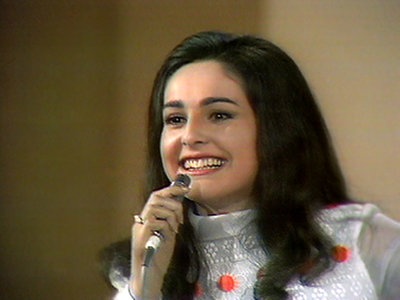
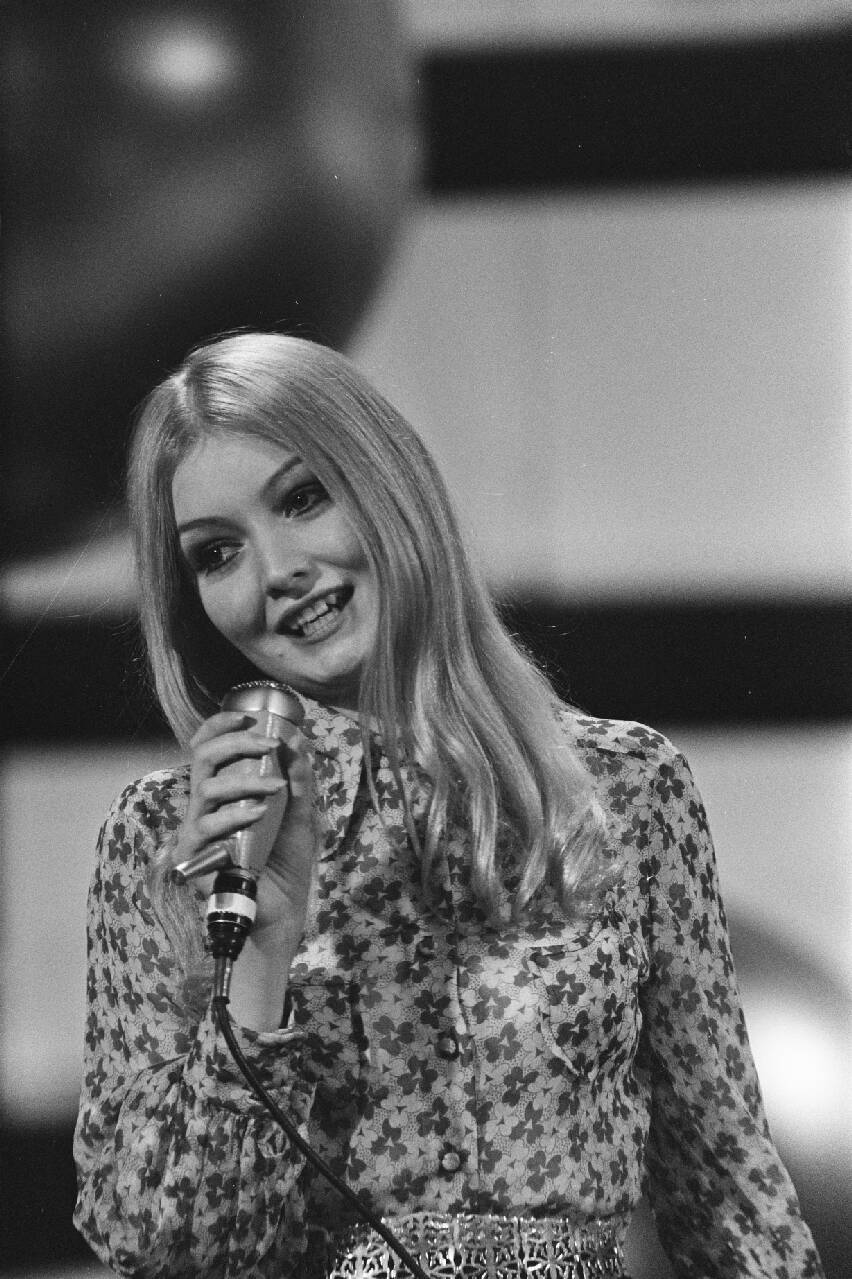
 Séverine

Date: April 3, 1971
Venue: Gaiety Theatre, Dublin, Ireland
Presenter: Bernadette Ní Ghallchóir
Conductor: Colman Pearce
Director: Tom McGrath
Scruteneer: Clifford Brown
Host broadcaster: RTÉ
Price presenter: Dana
Interval act: Shannon Castle entertainers
Duration: 1 hour, 46 minutes
Number of entries: 18
Debuting countries: Malta
Returning countries: Austria, Finland, Norway, Portugal, Sweden
Withdrawing countries: -
Winning Song: Un banc, un arbre, une rue - Séverine, Monaco

Voting system: Each country had two jury members, one aged between 16 and 25 and another aged between 26 and 55. They each awarded 1 to 5 points for each song (except for the song from their own country) immediately after it was performed, the votes were collected and counted as soon as they were cast. The juries watched the show on TV from a backstage area of the theatre and then appeared on stage to confirm their scores.

Saskia & Serge

Entries

01. Austria: Marianne Mendt - Musik (16th place, 66 points)
02. Malta: Joe Grech - Marija I-Maltija (18th place, 52 points)
03. Monaco: Séverine - Un banc, un arbre, une rue (1st place, 128 points)
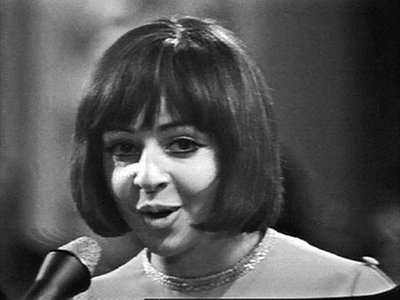
04. Switzerland: Peter, Sue and Marc - Les illusions de nos vingt ans (12th place, 78 points)
05. Germany: Katja Ebstein - Diese welt (3rd place, 100 points)
06. Spain: Karina - En un mundo nuevo (2nd place, 116 points)
07. France: Serge Lama - Un jardin sur la terre (10th place, 82 points)
08. Luxembourg: Monique Melsen - Pomme, pomme, pomme (13th place, 70 points)
09. UK: Clodagh Rodgers - Jack in de box (4th place, 98 points)
10. Belgium: Lily Castel & Jacques Raymond - Goeiemorgen morgen (14th place, 68 points)
11. Italy: Massimo Ranieri - L'amore è un attimo (5th place, 91 points)
12. Sweden: Family Four - Vita vide (6th place, 85 points)
13. Ireland: Angela Farrell - Oneday love (11th place, 79 points)
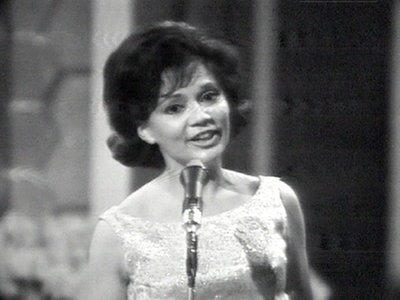
14. The Netherlands: Saskia & Serge - Tijd (6th place, 85 points)
15. Portugal: Tonicha - Menina do alto da serra (9th place, 83 points)
16. Yugoslavia: Krunoslav Slabinac - Tvoj dječak je tužan (14th place, 68 points)
17. Finland: Markku Aro & Koivistolaiset - Tie uuteen päivään (8th place, 84 points)
18. Norway: Hanne Krogh - Lykken er (17th place, 65 points)

The Eurovision Song Contest 1971 was the sixteenth Eurovision Song Contest and the first held in Dublin, Ireland. The new voting system that was introduced in this Eurovision did have one big problem: some juries gave fewer points out than others. Whether this was done in some cases to increase their respective countries' chances of winning is impossible to say, but the shortcomings of the system were nevertheless plain.

 Karina

Monaco's win was their first and only victory. The song was performed by a French singer, living in France, sung in French, conducted by a French native and written by a French team (Jean-Pierre Bourtayre and Yves Dessca). Séverine later claimed she never visited Monaco before or after her victory - a claim easily disproved by the preview video submitted by Tele-Monaco featuring the singer on location in the Principality.

Location

The Gaiety Theatre, a theatre on South King Street in Dublin, Ireland, was the venue for the 1971 contest. Designed by architect C.J. Phipps and built in under 7 months, the Gaiety was opened on 27 November 1871 with the Lord Lieutenant of Ireland as guest of honour and a double bill of the comedy She Stoops to Conquer and the burlesque La Belle Sauvage.

Séverine

Format

For the first time, each participating broadcaster was required to televise all the songs in previews prior to the live final. Belgium's preview video featured Nicole & Hugo performing the song Goeiemorgen, morgen, but Nicole was struck with a sudden illness days before the contest final, with Jacques Raymond & Lily Castel stepping in at very short notice to perform the entry in their place. Reports suggested that Castel hadn't even had enough time to buy a suitable dress for the show.

The BBC were worried about the possible audience reaction to the British song due to the hostilities raging in Northern Ireland. They specifically selected a singer from Northern Ireland, Clodagh Rodgers who was popular in both the UK and Ireland to ease any ill-feeling from the Dublin audience. She reported receiving death threats from the IRA for representing the UK.

 Lily Castel & Jacques Raymond

The Austrian singer sung her song Musik in Viennese, a dialect spoken in Vienna.

Groups of up to six people were allowed to perform for the first time, with the rule in previous contests of performing either solo or as a duet abolished. This was RTÉ's first outside broadcast in colour. The contest was broadcast in Iceland, USA & Hong Kong few days later.

Participating countries

Malta made their début in this year's contest, along Austria, Finland, Norway, Portugal, and Sweden, who all returned after a brief absence from the contest. This brought the total number of countries to eighteen.

Returning artists

Two artists returned to the competition this year. Belgium's Jacques Raymond who last performed for the nation in 1963; and Katja Ebstein for Germany who last participated in 1970.


Eurovision Song Contest 1970

 Dana

Date: March 21, 1970
Venue: RAI Congrescentrum, Amsterdam, Netherlands
Presenter: Willy Dobbe
Orchestra: Metropole Orchestra
Conductor: Dolf van der Linden
Director: Theo Ordeman
Scruteneer: Clifford Brown
Host broadcaster: NOS
Price presenter: Lenny Kuhr
Interval act: Don de Lurio Dancers
Duration: 1 hour, 14 minutes
Number of entries: 12
Debuting countries: -
Returning countries: -
Withdrawing countries: Finland, Norway, Portugal, Sweden
Winning Song: All Kinds Of Everything - Dana, Ireland
Voting system: Each country had 10 jury members who each cast one vote for their favourite song.

Mary Hopkin

Entries

01. The Netherlands: Hearts of Soul - Waterman (7th place, 7 points)
02. Switzerland: Henri Dès - Retour (4th place, 8 points)
03. Italy: Gianni Morandi - Occhi di ragazza (8th place, 5 points)
04. Yugoslavia: Eva Sršen - Pridi, dala ti bom cvet (11th place, 4 points)
05. Belgium: Jean Vallée - Viens l'oublier (8th place, 5 points)
06. France: Guy Bonnet - Marie-Blanche (4th place, 8 points)
07. UK: Mary Hopkin - Knock, knock who's there (2nd place, 26 points)
08. Luxembourg: David Alexandre Winter - Je suis tombé du ciel (12th place, 0 points)
09. Spain: Julio Iglesias - Gwendolyne (4th place, 8 points)
10. Monaco: Dominique Dussault - Marlène (8th place, 5 points)
11. Germany: Katja Ebstein - Wunder gibt es immer wieder (3rd place, 12 points)
12. Ireland: Dana - All kinds of everything (1st place, 32 points)

Patricia & Hearts of Soul

The Eurovision Song Contest 1970 was the 15th Eurovision Song Contest, held on March 21 1970 at the RAI Congrescentrum in Amsterdam, Netherlands. The Amsterdam contest is regarded as one of the most significant in Eurovision history for a number of reasons.

Ireland's win was their first. It is notable that nine of the 10 Belgian jury members awarded their votes to Ireland. The UK were second, six votes behind Ireland. Luxembourg received zero votes for the only time.

 Katja Ebstein

Location

The Congrescentrum, venue of the 1970 contest, is a semi-permanent exhibit at the Ferdinand Bolstraat to Amsterdam, and was opened on 31 October 1922. This building was replaced in 1961 by the current RAI building on Europe's Square. The current congress and event center on Europe Square, was designed by Alexander Bodon and opened on 2 February 1961.

Format

Due to the four-way tie in 1969, lots were drawn to choose which country would host this Eurovision. The Dutch producers were forced to pad out the show as only 12 nations decided to make the trip to Amsterdam. The result was a format which has endured almost to the present day. An extended opening sequence (filmed in Amsterdam) set the scene, while every entry was introduced by a short video 'postcard'. Interestingly, the long introduction film (over four minutes long) was followed by what probably is one of the shortest ever introductions by any presenter. Willy Dobbe only welcomed the viewers in English, French and Dutch, finishing her introduction after only 24 seconds.

 Dana

The set design was devised by Roland de Groot; a simple design was composed of a number of curved horizontal bars and silver baubles which could be moved in a variety of different ways.

To avoid an incident like in 1969, a tie rule was created. It stated that, if two or more songs gained the same number of votes, each song would have to be performed again. After that every jury except the juries of the countries concerned would have a show of hands of which they thought was the best. If the countries tied again, then they would share first place.

The Eurovision Song Contest rules didn't allow for groups to perform so The Hearts Of Soul, the Dutch participants, performed as Patricia &  Hearts of Soul.

Of the participating singers, a number were already established performers. Notably, the United Kingdom sent Mary Hopkin while David Alexandre Winter represented Luxembourg. The contest is also notable for the appearance of the then unknown Julio Iglesias, singing for Spain. Ireland won the contest with All Kinds of Everything, penned by Derry Lindsay and Jackie Smith and sung by another unknown, Dana, an 18-year-old Derry schoolgirl. The song became a million-seller and the singer an international star. As the contest was held in Holland this year, and the country was one of the four winners in 1969, Dana received her awards from joint winner Lenny Kuhr.

Participating countries

Austria (who had not taken part in 1969), Finland, Norway, Portugal and Sweden boycotted this contest as they were not pleased with the result of 1969 and the voting structure.

Returning artists

For the first time, no artists from previous contests returned.


Monday, 27 August 2012

Eurovision Song Contest 1969

Lulu,  Salomé, Massiel, Frida Boccara and Lenny Kuhr

Date: March 29, 1969
Venue: Teatro Real, Madrid, Spain
Presenter: Laurita Valenzuela
Orchestra: Augusto Algueró Orchestra
Conductor: Augusto Algueró
Director: Ramon Diez
Scruteneer: Clifford Brown
Host broadcaster: TVE
Price presenter: Massiel
Interval act: La España diferente
Duration: 1 hour, 48 minutes
Number of entries: 16
Debuting countries: -
Returning countries: -
Withdrawing countries: Austria
Winning Songs:
  • Un Jour Un Enfant - Frida Boccara, France (Emil Stern / Eddy Marnay)
  • Vivo Cantando - Salomé, Spain (Maria José de Cerato / Aniano Alcalde)
  • De Troubadour - Lenny Kuhr, The Netherlands (David Hartsema / Lenny Kuhr)
  • Boom Bang-A-Bang - Lulu, UK (Alan Moorhouse / Peter Warne)
Voting system: Each country had 10 jury members who each cast one vote for their favourite song.

 Lenny Kuhr

Entries

01. Yugoslavia: Ivan & 4M - Pozdrav svijetu (13th place, 5 points)
02. Luxembourg: Romuald - Catherine (11th place, 7 points)
03. Spain: Salomé - Vivo cantando (1st place, 18 points)
04. Monaco: Jean Jacques - Maman, Maman (6th place, 11 points)
05. Ireland: Muriel Day - The wages of love (7th place, 10 points)
06. Italy: Iva Zanicchi - Due grosse lacrime bianche (13th place, 5 points)
07. UK: Lulu - Boom bang-a-bang (1st place, 18 points)
08. The Netherlands: Lenny Kuhr - De troubadour (1st place, 18 points)
09. Sweden: Tommy Körberg - Judy, min vän (9th place, 8 points)
10. Belgium: Louis Neefs - Jennifer Jennings (7th place, 10 points)
11. Switzerland: Paola del Medico - Bonjour, bonjour (5th place, 13 points)
12. Norway: Kirstie Sparboe - Oj, oj, oj, så glad jeg skal bli (16th place, 1 point)
13. Germany: Siw Malmkvist - Primaballerina (9th place, 8 points)
14. France: Frida Boccara - Un jour, un enfant (1st place, 18 points)
15. Portugal: Simone de Oliveira - Desfolhada portuguesa (15th place, 4 points)
16. Finland: Jarkko & Laura - Kuin silloin ennen (12th place, 6 points)

The Eurovision Song Contest 1969 was the 14th in the series. Four countries won the contest, the first time ever a tie-break situation had occurred. However, there was no rule at the time to cover such an eventuality, so all four countries were declared joint winners.

Paola del Medico

France's win was their fourth. France became the first country to win the contest four times. The Netherlands' win was their third. Spain and the United Kingdom each won for the second time. And it was the first time that any country (Spain, in this case) had a winning ESC entry two years in a row.

Location

The venue selected to host the 1969 contest was the Teatro Real, an opera house located in Madrid. From 1867 it housed the Madrid Royal Conservatory until 1925 when a Royal Order on 6 December called for eviction owing to the damage that the construction of the Metro de Madrid had caused to the building. The theatre reopened in 1966 as a concert theatre and the main concert venue of the Spanish National Orchestra and the RTVE Symphony Orchestra.

Salomé

Format

In 1969, the stage featured an metal sculpture created by surrealist Spanish artist Salvador Dalí, who also was responsible for designing the publicity material for the 1969 contest.

It was the first time that the contest resulted in a tie for first place, with four countries each gaining 18 votes. Since there was at the time no rule to cover such an eventuality, all four countries were declared joint winners. This caused an unfortunate problem concerning the medals due to be distributed to the winners as there were not enough to go round, so that only the singers received their medals on the night: the songwriters, to some disgruntlement, were not awarded theirs until after the date of the contest.

Had the later tie-break rule been in place (the country receiving the highest score from any other country, as used in 1991), the Netherlands would have won, having received 6 points from France. United Kingdom would then have been runner up, having received 5 points from Sweden. On the other hand, with the present tie-break rule been in place (i.e. the song receiving votes from the most countries, then the song receiving the most high votes in case of another tie), France would have been the overall winner, with Spain in 2nd place. Both countries received votes from 9 countries, but France received 4 points from 2 countries whereas Spain received 3 points as their highest vote.

Siw Malmkvist

Participating countries 

Austria was absent from the contest, refusing to participate in a contest staged in Franco-ruled Spain.

Returning artists

Five artists returned in this year's contest. Louis Neefs for Belgium who last represented the nation in 1967; Germany's Siw Malmkvist who was also the participant for Sweden in 1960. Romuald for Luxembourg who represented Monaco last time in 1964; Norway's Kirsti Sparboe who represented the Scandinavian nation twice before in 1965 and 1967; and finally Simone de Oliveira who also represented Portugal in 1965.


Sunday, 26 August 2012

Eurovision Song Contest 1968

Massiel

Date: April 6, 1968
Venue: Royal Albert Hall, London, UK
Presenter: Katie Boyle
Conductor: Norrie Paramor
Director: Stewart Morris
Scruteneer: Clifford Brown
Host broadcaster: BBC
Price presenter: Sandie Shaw
Interval act: Impression from London
Duration: 1 hour, 37 minutes
Number of entries: 17
Debuting countries: -
Returning countries: -
Withdrawing countries: -
Winning Song: La, La, La - Massiel, Spain
Voting system: Each country had 10 jury members who each cast one vote for their favourite song

Entries:

01. Portugal: Carlos Mendes - Verão (11th place, 5 points)
02. The Netherlands: Ronnie Tober - Morgen (16th place, 1 point)
03. Belgium: Claude Lombard - Quand tu reviendras (7th place, 8 points)
04. Austria: Karel Gott - Tausend Fenster (13th place, 2 points)
05. Luxembourg: Chris Baldo & Sophie Garel - Nous vivrons d'amour (11th place, 5 points)
06. Switzerland: Gianni Mascolo - Guardando il sole (13th place, 2 points)
07. Monaco: Line & Willy - A chacun sa chanson (7th place, 8 points)
08. Sweden: Claes-Göran Hederström - Det börjar verka kärlek, banne mej (5th place, 15 points)
09. Finland: Kristina Hautala - Kun kello käy" (16th place, 1 point)
10. France: Isabelle Aubret - La source (3rd place, 20 points)
11. Italy: Sergio Endrigo - Marianne (1oth place, 7 points)
12. UK: Cliff Richards - Congratulations (2nd place, 28 points)
13. Norway: Odd Børre - Stress (13th place, 2 points)
14. Ireland: Pat McGeegan - Chance of a lifetime (4th place, 18 points)
15. Spain: Massiel - La, la, la (1st place, 29 points)
16. Germany: Wencke Myhre - Ein hoch der Liebe (6th place, 11 points)
17. Yugoslavia: Dubrovački trubaduri - Jedan dan (7th place, 8 points)

Massiel

The Eurovision Song Contest 1968 was the 13th Eurovision Song Contest. The contest was won by the Spanish song La, la, la, performed by Massiel. Originally Spain entered Joan Manuel Serrat to sing La, la, la, but his demand to sing in Catalan was an affront to Francoist Spain. Serrat was withdrawn and replaced by the very popular Massiel, who sang the same song in Spanish. La, la ,la was written by Manuel de la Calva and Ramón Arcusa.

Location

The 1968 venue was the Royal Albert Hall, a concert hall situated on the northern edge of the South Kensington area, in the City of Westminster, London, England, best known for holding the annual summer Proms concerts since 1941.

Format

1968 was the first time that the Eurovision Song Contest was broadcast in colour. The countries that broadcast it in colour were France, Germany, the Netherlands, Switzerland, and Sweden; in the United Kingdom it was broadcast as an encore presentation on BBC Two the next day. Also all of Eastern Europe and Tunisia broadcast the contest. Katie Boyle hosted the contest for a third time.

In the week before the contest, the UK was the big favourite to win and the only question was: who would come second to the UK? Congratulations was already high in the charts all over Europe. Cliff Richards came on stagein a blue suit to a welter of screams and great expectations. He did not let anybody down, moving on stage with a hen held mike anf giving the song his all. The screams never stopped and the applause at the end was exceptional but after a bizarre voting he finished in a very disappointing 2nd place. The spanish entry La, la, la beat the favourite and Bill Martin (writer of the UK entry) called the Spanish song a piece of rubbish.

Ronnie Tober

Only 5 of the 17 songs were performed by women

The Norwegian song Stress originally finished second in the 1968 Melodi Grand Prix, but was promoted to the Norwegian entry when the winning song Jag har aldri vært så glad i no'en som deg was withdrawn from the contest by its composer amid persistent allegations that it plagiarised the 1963 hit Summer Holiday by Cliff Richard. This is the only occasion on which the MGP winner did not go forward to Eurovision. 

Returning artists

Only one artist returned in this year's contest. The winner of the 1962 contest, Isabelle Aubret, returned once more for France.

Cliff Richard

Vote rigging allegations

In May 2008, a documentary about the ESC 1968 by Spanish film-maker Montse Fernández Villa was broadcast. Yo viví el mayo español, centred on the effects of May 1968 in Francoist Spain, and alleged that the 1968 Eurovision Song Contest was rigged by the Spanish dictator Francisco Franco, who would have sent state television officials across Europe offering cash and promising to buy television series and contract unknown artists. The allegation was based on a testimony by journalist José María Íñigo, a TVE employee at the time, who claimed the rigging was common knowledge and suggested that Spanish record label representatives offered to release albums by Bulgarian and Czech artists (neither Bulgaria nor Czechoslovakia were members of the European Broadcasting Union at the time).

The documentary claimed that the contest should in fact have been won by the United Kingdom's entry Congratulations performed by Cliff Richard, which finished second by one vote. Massiel, the performer of the winning entry, was outraged by the allegations, and claimed that if there had been fixes, other singers, who were more keen on Franco's regime, would have benefited. José María Iñigo, author of the statement in the documentary, personally apologized to Massiel and said that he had repeated a widespread rumour. Both Massiel and Iñigo accused television channel La Sexta, broadcaster of the documentary, of manufacturing the scandal.


Thursday, 23 August 2012

Frida boccara


Frida Boccara (October 29, 1940 – August 1, 1996) was a French singer.

Frida Boccara was born in Casablanca, Morocco. She submitted the song Autrefois to the French Eurovision Song Contest selection panel in 1964 but she was unsuccessful. At the Eurovision Song Contest held in Madrid, Spain in 1969 she represented France and performed Un jour, un enfant which was composed by Emile Stern with lyrics by Eddy Marnay. Her song (along with the entries from Netherlands, United Kingdom, and Spain) shared first place.

In1972 Frida Boccara entered the song Du soleil au coeur to the internal selection in France but the song was not chosen to represent France at the ESC in Edinburgh. Frida Boccara renewed her links with Eurovision by participating in the French national finals of 1980 and 1981. However, neither song won. In 1980 she came 5th with the song Un enfant de France and in 1981 she came 4th with the song Voilà comment je t'aime.

Frida Boccara was popular in many countries but especially in France and Spain.

She died in 1996 in Paris, of a pulmonary infection.


Wednesday, 22 August 2012

Eurovision Song Contest 1967

Sandie shaw

Date: April 8, 1967
Venue: Großer Festsaal der Wiener Hofburg, Vienna, Austria
Presenter: Erika Vaal
Orchestra: Johannes Fehring Orchestra
Conductor: Johannes Fehring
Director: Herbert Fuchs
Scruteneer: Clifford Brown
Host broadcaster: ORF
Price presenter: Udo Jürgens
Interval act: Wiener Sängerknaben
Duration: 1 hour, 48 minutes
Number of entries: 17
Debuting countries: -
Returning countries: -
Withdrawing countries: Denmark
Winning Song: Puppet on a string - Sandie Shaw, UK
Voting system: Each country had 10 jury members who each cast one vote for their favourite song, like in the years 1957-1961.

Entries

01. The Netherlands: Thérèse Steinmetz - Ring-dinge-ding (14th place, 2 points)
02. Luxembourg: Vicky - L'amour est bleu (4th place, 17 points)
03. Austria: Peter Horton - Warum es 100,000 sterne gibt (14th place, 2 points)
04. France: Noëlle Cordier - Il doit faire beau là-bas (3rd place, 20 points)
05. Portugal: Eduardo Nascimento - O vento mudou (12th place, 3 points)
06. Switzerland: Géraldine - Quel cœur vas-tu briser? (17th place, 0 points)
07. Sweden: Östen Warnerbring - Som en dröm (8th place, 7 points)
08. Finland: Fredi Varjoon - suojaan (12th place, 3 points)
09. Germany: Inge Brück - Anouschka (8th place, 7 points)
10. Belgium: Louis Neefs - Ik heb zorgen (7th place, 8 points)
11. UK: Sandie Shaw - Puppet on a string (1st place, 47 points
12. Spain: Raphael - Hablemos del amor (6th place, 9 points)
13. Norway: Kirstie Sparboe - Dukkemann (14th place, 2 points)
14. Monaco: Minouche Barelli - Boum-Badaboum (5th place, 10 points)
15. Yugoslavia: Lado Leskovar - Vse rože sveta (8th place, 7 points)
16. Italy: Claudio Villa - Non andare più lontano (11th place, 4 points)
17. Ireland: Sean Dunphy - If I could choose (2nd place, 22 points)

Thérèse Steinmetz

The Eurovision Song Contest 1967 was the twelfth Eurovision Song Contest. The winning entry Puppet on a String, sung barefoot by Sandie Shaw and written by Bill Martin and Phil Coulter had one of the widest margins of victory ever witnessed in the competition; it garnered more than twice as many votes as the second place song. The presenter, Erika Vaal, became confused whilst the voting was taking place, and declared the United Kingdom's entry to be the winner before the last country, Ireland, had announced its votes. Sandie Shaw intensely disliked the composition, though her attitude towards the song somewhat mellowed in later years, even releasing a new version in 2007.

Location

The venue for the 1967 contest was the Hofburg Palace, that has housed some of the most powerful people in European and Austrian history, including the Habsburg dynasty and rulers of the Austro-Hungarian empire. It currently serves as the official residence of the President of Austria. It was the Habsburgs' principal winter residence, as the Schönbrunn Palace was their preferred summer residence. The Hofburg area has been the documented seat of government since 1279 for various empires and republics.

Format

The stage setup was a little bit unusual this year. There were two revolving mirrored walls on both ends of the stage and started revolving at the start of each song and stopped revolving at the end of each song. Some female singers made a complain about this beacause some camera shots were not flattering. The stage seemed to distract both the performers and the audience. The mirrors may well have distracted presenter Erika Vaal and the scoreboard operators as well, because the scruteneer Clifford Brown had to interrupt the voting more often than usual.

The entry from Luxembourg, L'amour est bleu, sung by Vicky Leandros, came in fourth; nonetheless, it went on to become the biggest international hit of the 1967 contest, and a year later would be a big instrumental hit for French musician, Paul Mauriat, under the English version, Love is Blue. Denmark chose not to participate and left the contest at this point, to return in 1978. The reason was that the new director for the TV entertainment department at DR thought that the money could be spent in a better way.

 Vicky

The United Kingdom's win was their first. Television presenter, artist and musician, Rolf Harris provided the commentary for BBC Television viewers. Switzerland received zero votes for the second time. Portugal was represented by Eduardo Nascimento who was the first black male singer in the history of Eurovision Song Contest, performing O vento mudou. Rumours claimed that Portuguese prime minister Salazar had chosen this particular singer to show the rest of Europe that he wasn't racist.

Participating countries

Three artists returned in this year's contest. Claudio Villa from Italy who's previous participations were in 1962; and Kirsti Sparboe from Norway, who last participated in 1965; and Raphael for Spain who last represented the Iberian nation in 1966.

Returning artists

Sanremo winner Claudio Villa  was chosen to be the Italian entry for the ESC in Vienna and got to the rehearsing stages but the song Non pensare a me was released too early, so just days before the contest Claudio Villa had to change songs.


Tuesday, 21 August 2012

Eurovision Song Contest 1966

Udo Jürgens

Date: March 5, 1966
Venue: Villa Louvigny,Luxembourg City, Luxembourg
Presenter: Josiane Chen
Orchestra: Jean Roderès Orchestra
Conductor: Jean Roderès
Director: René Steichen
Scruteneer: Clifford Brown
Host broadcaster: CLT
Price presenter: France Gall
Interval act: Jean Roderès
Duration: 1 hour, 28 minutes
Number of entries: 18
Debuting countries: -
Returning countries: -
Withdrawing countries: -
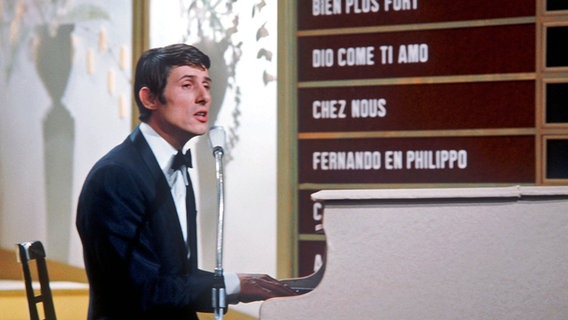
Winning Song: Merci, Chérie - Udo Jürgens, Austria
Voting system: Each country had 10 jury members who distributed three points among their one, two, or three favourite songs. The points were totalled and the first, second, and third placed songs were awarded 5, 3, and 1 votes in order. If only one song got every point within the jury it would get all 9 points. If only two songs were chosen, the songs would get 6 and 3 points in order.

Entries

01. Germany: Margot Eskens - Die Zeiger der Uhr (10th place, 7 points)
02. Denmark: Ulla Pia - Stop mens legen er go (14th place, 4 points)
03. Belgium: Tonia - Un peu de poivre un peu de sel (4th place, 14 points)
04. Luxembourg: Michèle Torr - Ce soir je t'attendais (10th place, 7 points)
05. Yugoslavia: Berta Ambrož - Brez besed (7th place, 9 points)
06. Norway: Åse Kleveland - Intet er nytt under solen (3rd place, 15 points)
07. Finland: Ann Christine - Playboy (10th place, 7 points)
08. Portugal: Madalena Iglésias - Ele e ela (13th place, 6 points)
09. Austria: Udo Jürgens - Merci, Chérie (1st place, 31 points)
10. Sweden: Lill Lindfors & Svante Thuresson - Nygammal vals (2nd place, 16 points)
11. Spain: Raphael - Yo soy aquél (7th place, 9 points)
12. Switzerland: Madeleine Pascal - Ne vois-tu pas? (6th place, 12 points)
13. Monaco: Tereza Kesovija - Bien plus fort (17th place, 0 points)
14. Italy: Domenico Modugno - Dio, come ti amo (17th place, 0 points)
15. France: Dominique Walter - Chez nous (16th place, 1 point)
16. The Netherlands: Milly Scott - Fernando en Fillipo (15th place, 2 points)
17. Ireland: Dickie Rock - Come back to stay (4th place, 14 points)
18. UK: Kenneth McKellar - A man without love (9th place, 8 points)

Milly Scott

The Eurovision Song Contest 1966 was the 11th edition and was held on 5 March 1966 in Luxembourg, Luxembourg. The rule stating that a country could only sing in any of its national languages was originally created in this year. This was possibly created due to the 1965 Swedish entry, Absent Friend which was sung in English. The winner of the 1966 contest was Austria with the song Merci, Chérie which was performed and composed by Udo Jürgens. Thomas Hörbiger wrote the lyrics to the song.

Location

The venue chosen to host the 1966 contest was the Villa Louvigny, which has also hosted the Eurovision Song Contest 1962. The building served as the headquarters of Compagnie Luxembourgeoise de Télédiffusion, the forerunner of RTL Group. It is located in Municipal Park, in the Ville Haute quarter of the centre of the city.

 Lill Lindfors & Svante Thuresson

Format

The backdrop on the stage was a large moving mobile, which distracted the attention from the singers.

Domenico Modugno, who performed for Italy, refused to use the orchestra and used a small combo to accompany him instead. Domenico Modugno thought the orchestra wasn't good enough.

During the voting process, the presenter (Josiane Chen) accidentally greeted United Kingdom by saying "Good night, London.", then, she realized the mistake and said "Good evening, London.", after. Michael Aspel, who was the spokesperson for the United Kingdom, at that time, responded by saying "Good morning, Luxembourg."

1966 marked the year the first ever black singer graced the Eurovision stage, Milly Scott representing the Netherlands. She was also the first singer to use a portable microphone. This was also the last contest that Denmark participated in until 1978, more than a decade later.

Participating countries

All countries which participated in the 1965 contest returned for a second consecutive year. There were no new nations, nor any returning, nor withdrawals.

Returning artists

Two artists returned for a second time in this year's contest. Udo Jürgens from Austria who's previous participations were in 1964 and 1965; and Domenico Modugno from Italy, who last participated in 1958 and 1959.