Wednesday, 10 October 2012

Eurovision Song Contest 2000

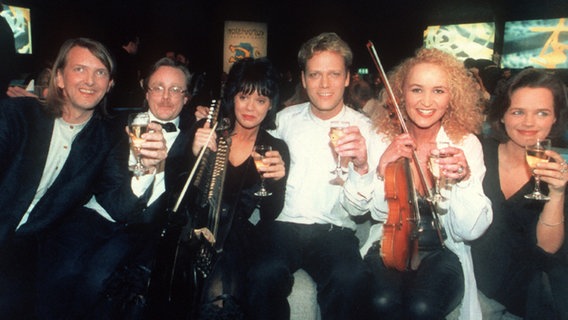
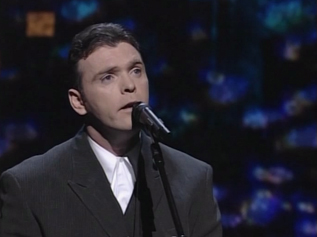
 Olsen Brothers

Date: May 13, 2000
Venue: Globe Arena, Stockholm, Sweden
Presenters: Kattis Åhlström, Anders Lundin
Director: Marius Bratten
Scruteneer: Christine Marchal-Ortiz
Host broadcaster: SVT
Interval act: Street Musicians from Stockholm
Duration: 3 hours, 2 minutes
Number of entries: 24
Debuting countries: Latvia
Returning countries: Finland, F.Y.R. Macedonia, Romania, Russia, Switzerland
Withdrawing countries: Bosnia & Herzegovina, Lithuania, Poland, Portugal, Slovenia
Winning Song: Fly on the Wings of Love - Olsen Brothers, Denmark
Voting system: Each country awarded 12, 10, 8-1 points to their 10 favourite songs

Entries

01. Israel: PingPong - Sameyakh (22nd place, 7 points)
02. The Netherlands: Linda Wagenmakers - No goodbyes (13th place, 40 points)
03. UK: Nicki French - Don't play that song again (16th place, 28 points)
04. Estonia: Ines - Once in a lifetime (4th place, 98 points)
05. France: Sofia Mestari - On aura le ciel (23rd place, 5 points)
06. Romania: Taxi - the moon (17th place, 25 points)
07. Malta: Claudette Pace - Desire (8th place, 73 points0
08. Norway: Charmed - My heart goes boom (11th place, 57 points)
09. Russia: Alsou - Solo (2nd place, 155 points)
10. Belgium: Nathalie Sorce - Envie de vivre (24th place, 2 points0
11. Cyprus: voice - Nomiza (21st place, 8 points)
12. Iceland: August & Telma - Tell me! (12th place, 45 points)
13. Spain: Serafín Zubiri - Colgado de un sueño (18th place, 18 points)
14. Denmark: Olsen Brothers - Fly on the wings of love (1st place, 195 points)
15. Germany: Stefan Raab - Wadde hadde dudde da? (5th place, 96 points)
16. Switzerland: Jane Bogaert - La vita cos'è? (20th place, 14 points)
17. Croatia: Goran Karan - Kad zaspu andeli (9th place, 70 points)
18. Sweden: Roger Pontare - When Spirits Are Calling My Name (7th place, 88 points)
19. F.Y.R. Macedonia: XXL - 100% te ljubam (15th place, 29 points)
20. Finland: Nina Åström - A little bit (18th place, 18 points)
21. Latvia: Brainstorm - My star (3rd place, 136 points)
22. Turkey: Pinar Ayhan & the SOS - Yorgunum anla (10th place, 59 points)
23. Ireland: Eamonn Toal - Millennium of love (6th place, 92 points)
24. Austria: The Rounder Girls - All to you (14th place, 34 points)

 Linda Wagenmakers

The Eurovision Song Contest 2000 was the 45th Eurovision Song Contest and was held on 13 May 2000 at the Globe Arena in Stockholm, Sweden, following Charlotte Nilsson's victory in Jerusalem the previous year. It was the first time since 1996 that the contest was held on mainland Europe. The contest was the second to be held in Stockholm, and the fourth held in Sweden. The presenters were Kattis Ahlström and Anders Lundin, and the contest was won by the Olsen Brothers who represented Denmark with the song Fly on the Wings of Love (originally: Smuk som et stjerneskud). The song was written by one of the brothers, Jørgen Olsen.

Format

The Globe Arena was, at the time, the largest venue chosen to host the contest with a capacity of 16,000 spectators. The postcards used to introduce each country participating involved Swedish themes that incorporated each nation in some respect. The logo for the contest, a pair of open mouth lips, was chosen by SVT, and was described by its designers as "a sensual, yet stylistically pure mouth representing song, dialogue and speech", and was later one of the possible choices for the generic logo introduced at the 2004 Contest.

The favourite in this year's contest was Estonia, who was also a fan favourite and praised by the press. However, as the voting results came in, Denmark immediately took control of the scoreboard, beating Russia into second place and Latvia into 3rd place.

For the first time, an official CD compilation was released; it contained all of the songs of the participating nations and was available throughout Europe. Such a disc was attempted in the previous year, however it lacked four of the competing songs.

Participating countries

Slovakia, Greece and Hungary decided not to compete for financial reasons. The countries with the five lowest average scores over the previous five contests who had participated in 1999, Bosnia and Herzegovina, Lithuania, Poland, Portugal and Slovenia were excluded meaning that five countries could return. These countries were: Finland, Macedonia, Romania, Russia and Switzerland. Latvia also joined contest as the only country to debut.

 Ines

Incidents

There were some controversies concerning some participating countries. Israel, who opened the contest, entered a group who waved Israeli and Syrian flags advocating peace between the two nations. The two male singers in the group also ran up to each other and kissed for a brief moment. The Russian delegation petitioned for the winning Olsen Brothers to be disqualified, after they had used a vocoder to give Jørgen Olsen an electronic sound to his voice, during one of the verses of their performance. This issue was rejected by the European Broadcasting Union (EBU).

The intermission during the finale of the ESC was Once Upon a Time Europe Was Covered With Ice, a movie/song directed, composed and edited by Johan Söderberg and produced by John Nordling. For the film Söderberg had traveled all over Europe to record children performing the score. On stage were violinist Caroline Lundgren, drummer Strängnäs Trumkorps plus street musicians from Stockholm and dancers from the Bounce Street Dance Company.

In the Netherlands, NOS decided to take the Contest off air halfway through because of the Enschede fireworks disaster that happened earlier that day, so it could use the channel for continuous news broadcasts. Later, NOS declared that it was both for practical reasons as well as because they found it "inappropriate to broadcast a light entertainment programme on the night of such a catastrophic event". As a result, televoting had to be suspended and the Dutch votes were given by a stand-by jury instead.

The contest was also broadcast in Canada, Australia, Japan, the United States and via the internet for the first time.

Voting

According to the EBU rules of the 45th Eurovision Song Contest 2000 (published on 23 September 1999), all participating countries should have used televoting, where the top ten most voted for songs were awarded the 12, 10, 8, 7, 6, 5, 4, 3, 2, 1 points. In exceptional circumstances where televoting was not possible, a jury was used instead: Russia, Macedonia, Turkey and Romania. The Dutch votes were the votes of the backup jury due to interrupted broadcasting of the contest in the Netherlands because of the fireworks disaster in the Dutch town of Enschede.

Returning artists

Three artists returned to the ESC this year. Alexandros Panayi, member of Voice, represented Cyprus in 1995, Serafín Zubiri participated Sweden in 1992 and Roger Pontare represented Sweden in 1994.

Monday, 8 October 2012

Eurovision Song Contest 1999

Charlotte Nilsson

Date: May 24, 1999
Venue: International Convention Center, Jerusalem, Israel
Presenters: Dafna Dekel, Yigal Ravid, Sigal Shahamon
Directors: Aharon Goldfinger, Hagay Mautner, Amnon Barkay
Scruteneer: Christine Marchal-Ortiz
Host broadcaster: IBA
Price presenter: Dana International
Interval act: Dana International, performing Free
Duration: 3 hours, 14 minutes
Number of entries: 23
Debuting countries: -
Returning countries: Austria, Bosnia & Herzegovina, Denmark, Iceland, Lithuania
Withdrawing countries: Finland, Greece, Hungary, F.Y.R. Macedonia, Romania, Slovakia, Switzerland
Winning Song: Take Me To Your Heaven - Charlotte Nilsson, Sweden
Voting system: Each country awarded 12, 10, 8-1 points to their 10 favourite songs

Béatrice & Dino

Entries

01. Lithuania: Aistė - Strazdas (20th place, 13 points)
02. Belgium: Vanessa Chinitor - Like the wind (12th place, 38 points)
03. Spain: Lydia - No quiero escuchar (23rd place, 1 point
04. Croatia: Doris Dragović - Marija Magdalena (4th place, 118 points)
05. UK: Precious - Say it again (12th place, 38 points)
06. Slovenia: Darja Švajger - For a thousand years (11th place, 50 points)
07. Turkey: Tuğba Önal & Grup Mistik - Dön Artık (16th place, 21 points)
08. Norway: Stig van Eijk - Living my life without you (14th place, 35 points)
09. Denmark: Trine Jepsen & Michael Teschl - This time I mean it (8th place, 71 points)
10. France: Nayah - Je veux donner ma voix (19th place, 14 points)
11. The Netherlands: Marlayne - One good reason (8th place, 71 points)
12. Poland: Mietek Szcześniak - Przytul mnie mocno (18th place, 17 points)
13. Iceland: Selma - All out of luck (2nd place, 146 points)
14. Cyprus: Marlain - Tha 'ne erotas (22nd place, 2 points)
15. sweden: Charlotte Nilsson - Take me to your heaven (1st place, 163 points)
16. Portugal: Rui Bandeira - Como tudo começou (21st place, 12 points)
17. Ireland: The Mullans - When you need me (17th place, 18 points)
18. Austria: Bobby Singer - Reflection (10th place, 65 points)
19. Israel: Eden - Yom Huledet (Happy Birthday) (5th place, 93 points)
20. Malta: Times Three - Believe 'n peace (15th place, 32 points)
21. Germany: Sürpriz - Reise nach Jerusalem - Kudüs'e seyahat (3rd place, 140 points)
22. Bosnia & Herzegovina: Dino & Béatrice - Putnici (7th place, 86 points)
23. Estonia: Evelin Samuel & Camille - Diamond of night (6th place, 90 points)

Eden

The Eurovision Song Contest 1999 was the 44th Eurovision Song Contest, held on May 29, 1999 in Jerusalem, Israel after Dana International won the contest the previous year in the United Kingdom. The venue for the contest was the Ussishkin Auditorium at the International Convention Center,the same place who´s was hosted the 1979 contest. Television anchor news Yigal Ravid, singer and 1992 contestant Dafna Dekel and model/actress Sigal Shahamon were the show's hosts, and it was the first time that three presenters were used to host the Contest. Israel's two previous winners, Izhar Cohen, who won in 1978 with A-Ba-Ni-Bi and Milk and Honey's Gali Atari who won it the next year with Hallelujah attended as spectators. The winner of the Contest was Charlotte Nilsson, representing Sweden with Take Me to Your Heaven, which scored 163 points. This was Sweden's fourth win in the Contest and the second in the 1990s (after Carola's win for Sweden in 1991). Take Me to Your Heaven was written by Lars Diedricson and Marcos Ubeda and is and  is an up-beat song about love, with the singer asking her lover to take her to heaven by loving her. Some fans have argued that it is derivative of previous Swedish 1974 winner ABBA.

Format

In the run-up to the Contest, many speculated that it would not be held in Israel, but would be moved to either Malta or the United Kingdom (the countries that completed the top 3 of the 1998 Contest). This came about after major concerns over funding for the event from the Israeli government arose, alongside the opposition from Orthodox Jews that they would attempt to stop the Contest from coming to Israel after Dana International won the previous year's Contest. This, however, provided no hindrance for IBA or to the organising team of the event, and the International Convention Center in Jerusalem was selected as the venue for the 44th Contest.

Selma

Long-standing rules in place for decades were abolished during this Contest: rules that each country had to sing in one of their national languages was abolished for the first time since 1977. A majority of the participating countries, thirteen out of twenty-three, chose to sing entirely or partly in English and only nine entirely in their respective national languages; Lithuania, Spain, Croatia, Slovenia, Poland, France, Cyprus, Portugal and Turkey. Furthermore, live music became optional for the first time in the Contest's history. IBA took advantage of this and decided to drop the orchestra from the Contest as a way to conserve money for the show. This meant that for the first time all entries used backing track during their performances. This caused controversy for Eurovision traditionalists, with three-time winner Johnny Logan criticising the move, describing the event now as karaoke.

In was announced in 1999 that, as of the 2000 Contest, the four biggest financial contributors to the European Broadcasting Union (EBU) – Germany, Spain, France and the United Kingdom – would all be given automatic entry into the Contest, regardless of their average scores over the past five years.

The favourites to win the Contest came from Iceland's Selma with All Out of Luck, and Cyprus's Marlain with Tha 'Ne Erotas, after an internet poll by fans. But, while Iceland finished second to Sweden (the country's best showing in the contest), Cyprus failed to inspire televotes, finishing second last with only two points, both from the United Kingdom.

Marlayne

A number of controversies occurred before the Contest. Two songs selected to compete in Israel were found to be ineligible: Bosnia and Herzegovina's Hari Mata Hari were disqualified after their entry was discovered to have been released in Finland some years previously; Germany's Corinna May was also disqualified after her song was revealed to have been released in 1997 by a different singer. Both artists would eventually represent their countries in Eurovision, in 2006 and 2002 respectively.

Croatia's entry attracted objections from the Norwegian delegation, due to synthesised male vocals being used on the backing track of Doris Dragović's entry. The EBU decided to reduce the country's score by a third for the purpose of calculating its five-year average to determine participation in future contests, though it was decided to leave its placement in the 1999 result unaffected.

The interval act was provided by Dana International, who performed a cover of the Stevie Wonder song Free, which caused some controversy in Israel due to the song's lyric. Dana International also appeared at the end of the show, giving the winning trophy to Nilsson. After pretending that the trophy was too heavy to lift, she fell to the stage, bringing down the winning composers with her. At this, security forces threw themselves upon her, think it to be a terrorist attack. The show finished with the three presenters inviting everyone on stage to sing a rendition of the English version of Hallelujah, the Israeli winner from the 1979 Contest, as a tribute to the victims of the Balkan War, who were unable to view the contest after the bombing resulted in their transmitters being blown up.

Vanessa Chinitor

A compilation CD was made and released in Israel, with the idea of containing all the competing songs on one CD. However, the songs from Poland, Cyprus, the Netherlands and the United Kingdom were not included, thus defeating the idea. Furthermore, unlike similar CDs released from the following year's Contest onwards, it was not an official release by the EBU.

Voting

Each country had a televote, where the top ten most voted-for songs were awarded the 12, 10, 8, 7, 6, 5, 4, 3, 2, 1 points, with the exceptions of Turkey, Lithuania, Ireland and Bosnia & Herzegovina who used juries.

After some thoroughly confusing thrills and spills in the early voting, with Lithuania awarding maximum points to the — for once — rank outsiders Ireland, the contest soon settled into a nip-and-tuck duel between Sweden and Iceland, but with Iceland more often than not holding a slight lead. The fortunes of Germany were more erratic - on a few occasions, their challenge seemed to be failing, only for a couple of high scores to haul them back to within striking distance of the leading pair. That appeared to be the case once again when the penultimate voting country, Bosnia and Herzegovina, handed ten points to the Germans. This momentarily distracted attention from the fact that the Balkan nation had not yet awarded any points to Sweden or Iceland, meaning that one of the two was bound to receive nothing. With Charlotte Nilsson of Sweden already having crept into a three-point lead at a crucial moment, the realisation quickly dawned that, while twelve points for Iceland would put them back into a commanding position, twelve points for Sweden would settle the contest in abrupt fashion.

Trine Jepsen & Michael Teschl

Participating countries

Latvia had attempted to participate in the Contest for the first time, but withdrew at a late stage. This gave Hungary a chance to enter the Contest; however, Magyar Televízió decided not to take part. This allowed Portugal to compete as the 23rd country.

Austria, Bosnia and Herzegovina, Denmark and Iceland returned to the Contest after being relegated from competing in 1998. Lithuania also returned to the Contest for the first time in five years. The Lithuanian delegation had had budget problems to contend with, and so the EBU allowed the Lithuanians to arrive in Israel a day later than everyone else. The first delegation on the other hand to walk the Holy Land were Estonia.

After being relegated from the 1998 Contest, Russia's Channel One had decided not to broadcast that year's contest, in order to allow for a strong comeback in Israel. However, as only countries which had broadcast the previous year's contest were allowed to enter the next year's contest, Russia was forced to miss another year. They were joined by Finland, Greece, Macedonia, Romania, Slovakia and Switzerland; the countries with the lowest average scores over the previous five years.

Returning Artists

Two artists returned to the contest this year. Doris Dragović represented Yugoslavia in 1986 and Darja Švajger represented Slovenia in 1995.


Sunday, 7 October 2012

Eurovision Song Contest 1998

 Dana International

Date: May 9, 1998
Venue: National Indoor Arena, Birmingham, UK
Presenters: Ulrika Jonsson, Terry Wogan
Orchestra: BBC Concert orchestra
Conductor: Martin Koch
Directors: Geoff Posner, Guy Freeman
Scruteneer: Christine Marchal-Ortiz
Host broadcaster: BBC
Price presenter: Katrina Leskanich
Interval act: Jupiter, The Bringer of Joviality
Duration: 3 hours, 1 minute
Number of entries: 25
Debuting countries: F.Y.R.Macedonia
Returning countries: Belgium, Finland, Israel, Romania, Slovakia
Withdrawing countries: Austria, Bosnia & Herzegovina, Denmark, Iceland, Italy, Russia
Winning Song: Diva - Dana International, Israel
Voting system: Each country awarded 12, 10, 8-1 points to their 10 favourite songs

Edsilia

Entries

01. Croatia: Danijela - Neka mi ne svane (5th place, 131 points)
02. Greece: Thalassa - Mia krifi evesthisia (20th place, 12 points)
03. France: Marie Line - Où aller (24th place, 3 points)
04. Spain: Mikel Herzog - ¿Qué voy a hacer sin ti? (16th place, 21 points)
05. Switzerland: Gunvor - Lass ihn (25th place, 0 points)
06. Slovakia: Katarína Hasprová - Modlitba (21st place, 8 points)
07. Poland: Sixteen - To takie proste (17th place, 19 points)
08. Israel: Dana International - Diva (1st place, 172 points)
09. Germany: Guildo Horn - Guildo hat euch lieb! (7th place, 86 points)
10. Malta: Chiara - The one that I love (3rd place, 165 points)
11. Hungary: Charlie - A holnap már nem lesz szomorú (23rd place, 4 points)
12. Slovenia: Vili Resnik - Naj bogovi slišijo (18th place, 17 points)
13. Ireland: Dawn Martin - Is always over now (9th place, 64 points)
14. Portugal: alma Lusa - Se eu te pudesse abraçar (12th place, 36 points)
15. Romania: Mălina Olinescu - Eu cred (22nd place, 6 points)
16. UK: Imaani - Where are you (2nd place, 166 points)
17. Cyprus: Michalis Hadjiyiannis - Genesis (11th place, 37 points)
18. The Netherlands: Edsilia - Hemel en aarde (4th place, 150 points)
19. Sweden: Jill Johnson - Kärleken är (10th place, 53 points)
20. Belgium: Mélanie Cohl - Dis oui (6th place, 122 points)
21. Finland: Edea - Aava (15th place, 22 points)
22. Norway: Lars Fredriksen - Alltid sommer (8th place, 79 points)
23. Estonia: Koit Toome - Mere lapsed (12th place, 36 points)
24. Turkey: Tüzmen - Unutamazsin (14th place, 25 points)
25. F.Y.R. Macedonia: Vlado Janevski - Ne zori, zoro (19th place, 16 points)

 Danijela

The Eurovision Song Contest 1998 was the 43rd Eurovision Song Contest and was held on 9 May 1998 at the National Indoor Arena in Birmingham, England. The presenters were Terry Wogan and Ulrika Jonsson. Despite being one of the presenters, Terry Wogan still managed to provide his trademark comedy commentary to the contest for the BBC.

Dana International from Israel narrowly won this year's Eurovision, with the song Diva, written by Svika Pick and Yoav Ginai. The singer had attracted much media attention both in Israel and Europe since she had undergone gender reassignment in 1993, being the first openly transgender performer to enter the competition.

Format

This year was notable for several reasons: this was the last year with an orchestra, the first year with mass televoting, and the last year with language restriction. The 1998 contest was also memorable because of the suspenseful voting, where the winner was decided on the last nation's 12 points. Greece, Germany, Slovenia, Switzerland, Malta, Israel and Belgium did not sing with an orchestra, they sang with fully backing tracks (although this did not stop both Germany and Slovenia presenting 'conductors' at the start of their performances). France utilised the violin section of the orchestra but as they did not bring a conductor of their own, no conductor was shown before their entry.

 Chiara

After the points from most of the countries were announced, it was clear that Israel, Malta, and the United Kingdom would be fighting for the top spot. Israel and Malta were apparently tied with 166 points after the penultimate vote (in fact, Spain's vote had been wrongly tallied and the real scores were Malta 165, Israel 164). Everything came down to the vote of Macedonia, who rewarded Israel with 8 points, United Kingdom 10, and in a twist awarded 12 points to Croatia not Malta, leaving Chiara to fall from first place to third. On the 50th anniversary of the establishment of the state of Israel, Dana International brought the nation their third Song Contest victory. Also, Edsilia Rombley, who placed fourth with 150 points, ensured the best result for the Netherlands since their win in 1975.

For the second year in a row, at least one country went home empty-handed; Switzerland's Gunvor Guggisberg with her composition Lass Ihn failed to score a single point.

Other notable participants were Germany's Guildo Horn, whose shocking comedic act culminated in his climbing the scaffolding on the side of the stage. Controversially chosen to represent Germany, he was criticised for his lack of seriousness by the German press. However, after winning by 60% of the vote, the German people were firmly on Horn's side. Guildo-Fever spread throughout Germany during the weeks leading up to the contest, with Horn becoming front-page material in Germany. He was also noticed in countries around Europe, and the early criticism that had existed in Germany arose in those countries. Even though his 7th place was disappointing, to some Germans it was a revival for the contest in Germany, and was the beginning of 4 consecutive top-ten finishes.

Jill Johnson

Greece earned only 12 points, all of which came from Cyprus. After the contest, there was a correction made with the Spanish votes, who mistakenly awarded Germany zero points, rather than the 12 that were rightfully theirs.

In a BBC interview, future Eurovision entrant Nicki French said that one of her most memorable Eurovision moments was Ulrika's infamous faux pas during the voting. On hearing that the Dutch lady announcing the Netherlands' votes had previously been a contestant in Eurovision, Ulrika replied, "A long time ago, was it?" which was followed by much laughter and booing from the audience. In fact Conny van den Bos who sang for the Netherlands in 1965 said that she had gone to the contest many years ago; unfortunately for both Conny and Ulrika this wasn't heard above the noise of the audience. What was heard, however, was Ulrika's seemingly insulting comment.

Russia and Italy did not broadcast the event due to withdrawals. In 1998 the Russian broadcaster Channel One prepared to run internal preselections, but soon organisers realised that because of low average results in previous years Russia would not qualify to compete in 1998 (though there were rumours that Channel One had planned to name Tatyana Ovsienko as their representative, performing Solntse moyo). Because Russia did not participate, Channel One decided not to broadcast the 1998 contest. According to other sources Channel One had expected Channel Russia to broadcast the contest.

Mălina Olinescu

Voting

Spain originally gave its 12 points to Israel and 10 to Norway. After the broadcast it was announced that Spanish broadcaster wrongly tallied the votes and Germany should have got the top mark - 12 points - instead of being snubbed, as it happened. The mistake was corrected and so Germany was placed 7th over Norway. Israel and Norway both received 2 points less than originally and Croatia, Malta, Portugal, United Kingdom, Netherlands, Belgium, Estonia and Turkey all received one point less than indicated during the broadcast.

With just one country left to vote, it was anyone's guess as to who was going to prevail, with Israel and Malta locked in battle with the scoreboard showing them with the same points total (although, due to the error above, Malta actually one point ahead), and the United Kingdom apparently nine points behind. When Macedonia came to award the decisive points, Israel was the first of the three contenders to be mentioned, receiving eight points. That was enough to knock the UK out of contention for victory, but left plenty of room for Israel to be overtaken by their principal rival. Next, the ten points went to the UK, nudging them into what looked like being an extremely fleeting spell in second place, since most of the audience assumed the twelve points were destined for Malta. Instead, there were gasps as Macedonia sent the final points of the evening to fellow Balkan nation Croatia, handing Israel their first win in the contest since "Hallelujah" in 1979.

It is also noteworthy that Israel only received points from 21 of the 24 other countries, whereas the United Kingdom received at least one point from every country, but finished second. Furthermore, whilst Israel received three sets of 12 points compared to Malta and the United Kingdom who both received four sets of 12 points, Israel received a seven sets of 10 points to help seal the win.

Michalis Hadjiyiannis

Participating countries

Macedonia, participating as Former Yugoslav Republic of Macedonia, took part for the first time, after their 1996 entry did not make it past the internal selection by the EBU. Belgium, Finland, Israel, Romania and Slovakia all participated after their break from the previous year's contest; Austria, Bosnia and Herzegovina, Denmark, Russia and Iceland could not participate because of their low average scores from the past five years. The Italian broadcaster, RAI, decided to withdraw from the contest, a move that would see Italy absent from the contest for 13 years before their return in 2011.

Returning artists

Two artists returned to the contest in 1998. Danijela represented Croatia in 1995 as a member of Magazin and José Cid, member of Alma Lusa, represented Portugal in 1980.


Saturday, 6 October 2012

Eurovision Song Contest 1997

 Katarina and the Waves

Date: May 3, 1997
Venue: Point Theatre, Dublin, Ireland
Presenters: Carrie Crowley, Ronan Keating
Orchestra: RTÉ Concert orchestra
Conductor: Frank McNamara
Director: Ian McGarry
Scruteneer: Marie-Claire Vionnet
Host broadcaster: RTÉ
Price presenter: -
Interval act: Ronan Keating,Boyzone
Duration: 3 hours, 11 minutes
Number of entries: 25
Debuting countries: -
Returning countries: Denmark, Germany, Hungary, Italy, Russia
Withdrawing countries: Belgium, Finland, Slovakia
Winning Song: Love Shine A Light - Katrina & the waves, UK
Voting system: Each country awarded 12, 10, 8-1 points to their 10 favourite songs

Katrina Leskanich

Entries

01. Cyprus: Hara & Andreas Konstantinou - Mana Mou (5th place, 98 points)
02. Turkey: Şebnem Paker & Grup Etnic - Dinle (3rd place, 121 points)
03. Norway: Tor endresen - San Francisco (24th place, 0 points)
04. Austria: Bettina Soriat - One step (21st place, 12 points)
05. Ireland: Marc Roberts - Mysterious woman (2nd place, 157 points)
06. Slovenia: Tanja Ribič - Zbudi ze (10th place, 60 points)
07. Switzerland: Barbara Berta - Dentro di me (22nd place, 5 points)
08. The Netherlands: Mrs. Einstein - Niemand heeft nog tijd (22nd place, 5 points)
09. Italy: Jalisse - Fiumi di parole (4th place, 114 points)
10. Spain: Marcos Llunas - Sin rencor (6th place, 96 points)
11. Germany: Bianca Shomburg - Zeit (18th place, 22 points)
12. Poland: Anna Maria Jopek - Ale jestem (11th place, 54 points)
13. Estonia: Maarja-Liis Ilus - Keelatud maa (8th place, 82 points)
14. Bosnia & Herzegovina: Alma Čardžić - Goodbye (18th place, 22 points)
15. Portugal: Célia Lawson - Antes do adeus (24th place, 0 points)
16. Sweden: Blond - Bara hon älskar mig (14th place, 36 points)
17. Greece: Marianna Zorba - Horepse (12th place, 39 points)
18. Malta: Debbie Scerri - Let me fly (9th place, 66 points)
19. Hungary: V.I.P. - Miért kell, hogy elmenj? (12th place, 39 points)
20. Russia: Alla Pugacheva - Primadonna (15th place, 33 points)
21. Denmark: Kølig Kaj - Stemmen i mit liv (16th place, 25 place)
22. France: Fanny - Sentiments songes (7th place, 95 points)
23. Croatia: E.N.I. - Probudi me (17th place, 24 points)
24. UK: Katarina & the Waves - Love shine a light (1st place, 227 points)
25. Iceland: Paul Oscar - Minn hinsti dans (20th place, 18 points)

Mrs. Einstein

The Eurovision Song Contest 1997, was the 42nd Eurovision Song Contest and it was held at the Point Theatre Dublin, Ireland, on 3 May 1997. Carrie Crowley and Boyzone member Ronan Keating were the presenters of the show.

Katrina and the Waves, representing the United Kingdom, were the winners of the contest with the song Love Shine a Light, written by that band's lead guitarist Kimberley Rew, and Marc Roberts from Ireland came second with Mysterious Woman. Despite being the runner-up, it remarkably received only one 12-point score, which came from the United Kingdom. The winning song scored an unprecedented 227 points; it received points from all participating countries, including five sets of 10 points and a record-breaking ten sets of the maximum 12 points. Love Shine a Light is still regarded as one of the most successful Eurovision winners, and was the closing song in the medleys that opened the 50th anniversary show Congratulations in Copenhagen in 2005, and the ESC 2006 semi-final in Athens. With this victory, the United Kingdom has five Eurovision wins and it is to date the country's last win in the Contest.

Marc Roberts

Format

After the controversy over the pre-selection in 1996, the European Broadcasting Union introduced a new system for 1997: countries with the lowest average scores over the previous four years would be excluded from the 1997 contest, and those with the lowest averages over the previous five years would be excluded from future contests (save that every country so excluded for one year would automatically be allowed to participate the following year), with so many countries being omitted as would reduce the number of participants each year to 25.

Israel declined to participate, as the Contest was held on its Holocaust Remembrance Day, granting a reprieve to Bosnia and Herzegovina, which would otherwise have been excluded owing to its low point average over the previous four years.

RTÉ once again produced a highly spectacular show, with a stage that had a smaller performance space for the artists than in previous years. This was the third Eurovision set to be designed by Paula Farrell, who had previously been involved with the 1988 and 1994 contests.

Jalisse

There was a wide array of different styles this year. Denmark brought a rap song, Croatia came with their version of the Spice Girls and Sweden brought a mid-1980s style boy band. The music was in general more modern than before, and for the first time in six years, an up-tempo song won.

This year, televoting was tested in five countries: Austria, Germany, Sweden, Switzerland and the United Kingdom. The results of the televoting countries were, in some cases, different from those that used a jury. Iceland received 16 of its 18 points from these five countries.

Also, for the first time in Eurovision history, there was a country where not one, but two spokespeople gave votes- France. Television reporter Frédéric Ferrer and 1977 Eurovision winner Marie Myriam each took turns at giving results from that country.

Long-time Irish conductor Noel Kelehan was not the host conductor this year, the duty being fulfilled by Frank McNamara. However, from this year entrants were allowed to use playback, and in 1999, the orchestra was completely abolished. The very first use of playback in the Eurovision came much earlier in 1973 when Cliff Richard performed for the second time with the Shadows on Power to All Our Friends.

Blond

Voting

Iceland got most of its 18 points from the 5 countries that used televoting. Ireland was ostensibly the best scoring country across the televoting countries, except they were able to score points from all 5 televoting countries. The United Kingdom was only eligible to receive points from 4 of them, since they couldn't vote for themselves. In fact, the UK received 12 points from all the other televoting countries except Germany, from whom they received 10 points: in other words, the UK earned 46 of 48 possible televote points that year; Ireland earned 47 of 60 possible televote points, including their only 12 from the UK.

Returning artists

There were three returning artists in 1997. Alma Čardžić represented Bosnia & Herzegovina, Maarja-Liis Ilus represented Estonia in 1996 and Şebnem Paker represented Turkey in the same year.


Friday, 5 October 2012

Eurovision Song Contest 1996

Eimear Quinn
Date: May 18, 1996
Venue: Oslo Spektum, Oslo, Norway
Presenters: Ingvild Bryn, Morten Harket
Orchestra: NRK orchestra
Conductor: Frode Thingnæs
Director: Pal Veiglum
Scruteneer: Christine Marchal-Ortiz
Host broadcaster: NRK
Price presenter: Rolf Løvland, Fionualla Sherry, Petter Skavlan
Interval act: Beacon Burning: video and dance act
Duration: 3 hours
Number of entries: 23
Debuting countries: -
Returning countries: Estonia, Finland, The Netherlands, Slovakia, Switzerland
Withdrawing countries: Denmark, Germany, Hungary, Israel, Russia
Winning Song: The Voice - Eimear Quinn, Ireland
Voting system: Each country awarded 12, 10, 8-1 points to their 10 favourite songs

Entries

01. Turkey: Şebnem Paker - Beşinci Mevsim (12th place, 57 points)
02. UK: Gina G - Ooh aah... just a little bit (8th place, 77 points)
03. Spain: Antonio Carbonell - ¡Ay, qué deseo! (20th place, 17 points)
04. Portugal: Lúcia Moniz - O meu coração não tem cor (6th place, 92 points)
05. Cyprus: Constantinos - Mono yia mas (9th place, 72 points)
06. Malta: Miriam Christine - In a woman's heart (10th place, 68 points)
07. Croatia: Maja Blagdan - Sveta ljubav (4th place, 98 points)
08. Austria: George Nussbaumer - Weil's dr guat got (10th place, 68 points)
09. Switzerland: Kathy Leander - Mon coeur l'aime (16th place, 22 points)
10. Greece: Mariana Efstratiou - Emeis Forame to Himona Anixiatika (14th points, 36 points)
11. Estonia: Maarja-Liis Ilus & Ivo Linna - Kaelakee hääl (5th place, 94 points)
12. Norway: Elisabeth Andreassen - I evighet (2nd, 114 points)
13. France: Dan Ar Braz & L'Héritage des Celtes - Diwanit bugale (19th place, 18 points)
14. Slovenia: Regina - Dan najlepših sanj (21st place, 16 points)
15. The Netherlands: Maxine & Franklin Brown - De eerste keer (7th place, 78 points)
16. Belgium: Lisa Del Bo - Liefde is een kaartspel (16th place, 22 points)
17. Ireland: Eimear Quinn - The voice (1st place, 162 points)
18. Finland: Jasmine - Niin kaunis on taivas (23rd place, 9 points)
19. Iceland: Anna Mjöll - Sjúbídú (13th place, 51 points)
20. Poland: Kasia Kowalska - Chcę znać swój grzech... (15th place, 31 points)
21. Bosnia & Herzegovina: Amila Glamočak - Za našu ljubav (22nd place, 13 points)
22. Slovakia: Marcel Palonder - Kým nás máš (18th place, 19 points)
23. Sweden: One More Time - Den vilda (3rd place, 100 points)

Franklin Brown & Maxine

The Eurovision Song Contest 1996 was the 41st Eurovision Song Contest and was held on May 18 1996 in Oslo Spektrum in Oslo, Norway. The presenters were Ingvild Bryn and Morten Harket. Morten Harket, lead singer of A-ha, opened the show with a performance of his single Heaven's Not For Saints. Eimear Quinn of Ireland was the winner of this Eurovision with the song, The Voice. The song was written by Brendan Graham, who also composed the 1994 winner Rock 'n' Roll Kids. It was also a record seventh win for Ireland.

Format

The European Broadcasting Union continued to experiment in their efforts to find a broadly acceptable method of whittling down the large number of potential participating countries to a more realistic figure. This year, they reverted to the pre-qualifying round that had been used for the 1993 contest, but this time with just one country exempt from the process - the host Norway. The pre-qualifier was an oddity in that it was not broadcast in any form, and did not even entail any live performance of the entries. Instead, the traditional set of national juries simply listened to the studio recordings of the 29 participating songs, through audio tapes, and awarded points accordingly. All that was subsequently revealed of their deliberations was which countries had qualified, with the precise scores and placings remaining under wraps (although they were leaked some time later). The 22 best scoring countries went on to participate at the ESC in Oslo.

Maja Blagdan

It rapidly became evident that this system was no more sustainable than any other the EBU had tried, as it meant that several countries had gone through their traditional full-blown national selection procedure to come up with an entry, only to suffer the anti-climax of having their challenge quietly extinguished without even having had the opportunity of presenting the song to an international audience. As a leading financial contributor to the contest, Germany were particularly aggrieved that their entry, the techno song Planet of Blue performed by Leon, was one of the seven cast aside. It was the only year in the history of the ESC in which Germany did not participate in the final.

The 1996 contest also featured two novelties — which similarly failed to become a tradition — firstly a short 'good luck message' for each entry, recorded by a political leader or official from their country. The seniority of the figure who delivered the message varied wildly from country to country, ranging from Presidents and Prime Ministers on one end of the spectrum to junior ministers or ambassadors on the other, but a few very significant European political figures did appear, including long-serving Swedish premier Göran Persson and President Alija Izetbegović of Bosnia and Herzegovina. But of course the only good luck wish that was fully rewarded in the end was that of Irish Taoiseach John Bruton, who introduced the song that took his country to a fourth win in five years.

Secondly, the voting section was conducted using blue screen virtual reality technology provided by Silicon Graphics. The host Ingvild Bryn introduced the viewers to the 'blue room', upon which a 3D scoreboard, views of the green room, the jury spokespersons and country graphics appeared. The only physical aspects were Ingvild herself and two podiums.

Maarja-Liis Ilus & Ivo Linna

It seems that a national final was held in 1996 for Federal Republic of Yugoslavia, which was won by Maja Odzaklijevska. Maja Odzaklijevska won the Festival MESAM 1996 with the song Rastanak but this festival existed since 1983 and the only common point with Beovizij (Serbian national final) is that the festival used to be organised in the Sava Centar (the biggest congress hall in Belgrade). However RTS considered Maja to be their Eurovision Representative. But, due to ongoing sanctions, the country was unable to enter. Bulgaria, at some stage, wanted to participate as well but they withdrew eventually.

Voting

When Belén Fernández de Henestrosa, the Spanish spokesperson, announced the votes of the Spanish jury, she awarded six points to Holland (the Netherlands), which host Ingvild Byrn misheard as Poland. The official results table corrected this error, and the Netherlands' seventh place result was restored at the expense of the United Kingdom, who ultimately finished eighth. Norway's entry, I evighet, is notable for being the only runner-up not to receive a single 12 points score in a Eurovision final since the current voting method was introduced in 1975.

Returning artists

Two artists returned to the contest this year. Mariana Efstratiou represented Greece in 1987 as a backing vocalist, and in 1989. Elisabeth Andressen represented Sweden in 1982 and Norway in 1985 and 1994.

Lúcia Moniz

Pre-qualifying round

Date: March, 20/21 1996
Location: all participating countries
Participating countries: 29

01. Austria: George Nussbaumer - Weil'n dr guat got (6th place, 80 points)
02. Belgium: Lisa Del Bo - Liefde is een kaartspel (12th place, 45 points)
03. Bosnia & Herzegovina: Amila Glamočak - Za našu ljubav (21st place, 29 points)
04. Croatia: Maja Blagdan - Sveta ljubav (19th place, 30 points)
05. Cyprus: Constantinos - Mono yia mas (15th place, 42 points)
06. Denmark: Dorthe Andersen & Martin Loft - Kun med dig (25th place, 22 points)
07. Estonia: Maarja-Liis Ilus & Ivo Linna - Kaelakee hääl (5th place, 106 points)
08. Finland: Jasmine - Niin kaunis on taivas (22nd place, 28 points)
09. France: Dan Ar Braz & L'Héritage des Celtes - Diwanit bugale (11th place, 55 points)
10. Germany: Leon - Planet of blue (24th place, 24 points)
11. Greece: Mariana Efrstratiou - Emeis Forame to Himona Anixiatika (12th place, 45 points)
12. Hungary: Gjon Delhusa - Fortuna (23rd place, 26 points)
13. Iceland: Anna Mjöll - Sjúbídú (10th place, 59 points)
14. Ireland: Eimear Quinn - The voice (2nd place, 198 points)
15. Israel: Galit Bell - Shalom olam (28th place, 12 points)
16. F.Y.R. Macedonia: Kalipi - Samo ti (26th place, 14 points)
17. Malta: Miriam Christine - In a woman's heart (4th place, 138 points)
18. The Netherlands: Maxine & Franklin Brown - De eerste keer (9th place, 63 points)
19. Poland: Kasia Kowalska - Chcę znać swój grzech... (15th place, 42 points)
20. Portugal: Lúcia Moniz - O meu coração não tem cor (18th place, 32 points)
21. Romania: Monica Anghel & Sincron - Rugă pentru pacea lumii (29th place, 11 points)
22. Russia: Andrej Kosinskij - Ja eto ja (26th place, 14 points)
23. Slovakia: Marcel Palonder - Kým nás máš (17th place, 36 points)
24. Slovenia: Regina - Dan najlepših sanj (19th place, 30 points)
25. Spain: Antonio Carbonell - ¡Ay, qué deseo! (14th place, 43 points)
26. Sweden: One More Time - Den vilda (1st place, 227 points)
27. Switzerland: Kathy Leander - Mon coeur l'aime (8th place, 67 points)
28. Turkey: Şebnem Paker - Beşinci Mevsim (7th place, 69 points)
29. UK: Gina G - Ooh aah... just a little bit (3rd place, 153 points)

Thursday, 4 October 2012

Nylon Beat

 Nylon Beat

Nylon Beat was a Finnish pop band that was very popular during 1990s and the beginning of the 2000s, consisting of the girl duo Jonna Kosonen and Erin Koivisto. They received eight gold and seven platinum records and the Band of the Year 1999 Emma award during their active career, which was between 1995–2003.

The band was formed in 1995 as a result of TV show Kiitorata. By the time both girls were only 16 years old. They started with backup tracks and dancers. Later their music matured somewhat and finally they performed fully live with a real band consisting of several professional musicians. Most of the music was written by Risto Asikainen and Ilkka Vainio, the production mostly done by Risro Asikainen.

Other artists have covered Nylon Beat songs, most notably popular Korean pop group S.E.S.

Although the duo nominally had already given their final concert on New Year's Eve 2003, they reformed again to perform as a warming act for two Toto gigs: the first was on August 17, 2007 in Oulu and the second on August 18, 2007 in Tampere.

Nylon Beat participated twice in the Finnish national final for the ESC. Before coming 5th in 2000 with Viha ja rakkaus, they came 3rd in 1998 with the song Umm ma ma.

Monday, 1 October 2012

Eurovision Song Contest 1995

 Secret Garden

Date: May 13, 1995
Venue: Point Theatre, Dublin, Ireland
Presenter: Mary Kennedy
Orchestra: RTÉ Concert orchestra
Conductor: Noel Kelehan
Director: John Comiskey
Scruteneer: Christian Clausen
Host broadcaster: RTÉ
Price presenter: Paul Harrington & Charlie McGettigan
Interval act: Micheal O' Suilleabhain & The Monks From Glenstal Abbey with Lumen
Duration: 2 hours, 51 minutes
Number of entries: 23
Debuting countries: -
Returning countries: Belgium, Denmark, Israel, Slovenia, Turkey
Withdrawing countries: Estonia, Netherlands, Finland, Lithuania, Romania, Slovakia, Switzerland
Winning Song: Nocturne - Secret Garden, Norway
Voting system: Each country awarded 12, 10, 8-1 points to their 10 favourite songs

Eddie Friel

Entries

01. Poland: Justyna - sama (18th place, 15 points)
02. Ireland: Eddie Friel - Dreamin'(14th place, 44 points)
03. Germany: Stone & Stone - Verliebt in dich (23rd place, 1 points)
04. Bosnia & Herzegovina: Davorin Popović - Dvadeset prvi vijek (19th place, 14 points)
05. Norway: Secret Garden - Nocturne (1st place, 148 points)
06. Russia: Philipp Kirkorov - Kolibelnaya dlya vulkana (17th place, 17 points)
07. Iceland: Bo Halldórsson - Núna (15th place, 31 points)
08. Austria: Stella Jones - Die Welt dreht sich verkehrt (13th place, 67 points)
09. Spain: Anabel Conde - Vuelve Conmigo (2nd place, 119 points)
10. Turkey: Arzu Ece - Sev (16th place, 21 points)
11. Croatia: Magazin & Lidija - Nostalgija (6th place, 91 points)
12. France: Nathalie Santamaria - Il me donne rendez-vous (4th place, 94 points)
13. Hungary: Csaba Szigeti - Új név a régi ház falán (22nd, 3 points)
14. Belgium: Frédéric Etherlinck - La voix est libre (20th place, 8 points)
15. UK: Love City Groove - Love City Groove (10th place, 76 points)
16. Portugal: Tó Cruz - Baunilha e chocolate (21st place, 5 points)
17. Cyprus: Alexandros Panayi - Sti fotia (9th place, 79 points)
18. Sweden: Jan Johansen - Se på mig (3rd place, 100 points)
19. Denmark: Aud Wilken - Fra Mols til Skagen (5th place, 92 points)
20. Slovenia: Darja Švajger - Prisluhni mi (7th place, 84 points)
21. Israel: Liora - Amen (8th place, 81 points)
22. Malta: Mike Spiteri - Keep me in mind (10th place, 76 points)
23. Greece: Elina Konstantopoulou - Pia prosefhi (12th place, 68 points)  

Anabel Conde

The Eurovision Song Contest 1995 was the 40th Eurovision Song Contest and was held on May 13 1995 in the Point Theatre in Dublin, Ireland. The presenter was Mary Kennedy. To date, this year's competition was also the last one with only one host. This contest broke the chain of victories that Ireland enjoyed in 1992, 1993, and 1994. This was Ireland's 3rd year in succession to host the contest - and to mark the 40th show, it was opened with a 4-minute retrospective showing images from the contest's history. The Norwegian group Secret Garden was the winner of this contest with the mostly instrumental song, Nocturne. Incidentally, Secret Garden's violinist was Fionnuala Sherry, who is Irish. Nocturne was written by Rolf Løvland

The song is noted for its relative absence of lyrics - with only 24 words being sung in the original Norwegian version and much of the rest of the song being given over to a violin intermezzo performed by Irish musician Fionnuala Sherry.

While no other victorious song has featured so few words, Finland would go on to place 15th in the 1998 Contest with Aava, which contains only six words repeated throughout the song. The previous holder of the record of shortest lyrics in Eurovision history was Belgium and their 1983 entry Rendez-vous, with a total of 11 words.

Jan Johansen

Format

After winning the 1994 contest, RTÉ were worried about whether they could afford to host a third consecutive contest in 1995. The BBC had offered to take on the responsibility of hosting the contest, and had even proposed that the contest be staged as a joint production in Belfast, capital of Northern Ireland. In the end RTÉ decided to stage the contest on its own. However they did ask the EBU that, should Ireland win once more, that they would not be expected to host the event for a fourth year in a row.

Video montage commemorating the history of the Eurovision Song Contest for its 40th edition was shown at the opening of the contest.

The stage was designed by Alan Farquharson who also designed the Millstreet 1993 set. Although it was quite dark and often gloomy in appearance, it did form the basis for a spectacular opening whereby a giant screen rotated to reveal the presenter who descended a stairway which ultimately disappeared to allow for the arrow shaped stage to come together amid fireworks. The interval act consisted of several well known Irish performers including Clannad, Brian Kennedy (who would go on to actually represent Ireland 11 years later), and was composed by leading musician Michael O'Suilleabhan.

Darja Švajger

Two of Ireland's winners attended the contest; Dana, who was Ireland's first winner, winning the contest in 1970 with All Kinds of Everything, and Mr Eurovision himself, Johnny Logan, winning the contest as a singer in 1980 and 1987, and also for writing Linda Martin's 1992 winning song Why Me?. It was his birthday that night, but according to host Mary Kennedy, He wouldn't say which one! Nonetheless, the audience sang Happy Birthday for him, assisted by the orchestra.

The favourite to win the contest, according to bookmakers, was Sweden with the pop-ballad Se på mej. Other countries in contention for the win were Denmark, Israel, Spain, and the eventual winner, Norway. The winning song was something new at Eurovision in that it contained only 24 words accompanied by long violin solos. The United Kingdom contributed a modern rap number, while the previous year’s runner-up, Poland, went for something that completely contrasted with their début entry.

After the voting was completed, Norway was the winner with 148 points, followed by Spain's Vuelve Conmigo with 119 points, and Sweden gaining 100 points

Aud Wilken

Participating counties

The EBU decreased the number of participants back to 23 to make sure the show wouldn't last longer than 3 hours. 5 of the 6 countries that were relegated the previous year came back to the contest, Luxembourg decided to stop participating completely and Italy withdrew voluntarily, as in 1994.

There was much speculation in Ireland as to whether RTÉ had deliberately chosen a song perceived as not having a good chance of winning in order to avoid hosting the contest for a fourth time in a row - although this was never verified. This rumour did, however inspire a popular episode of Father Ted. In any event, RTÉ ended up hosting the contest once again in 1997.

Returing artists

There was only one returning artists in 1995. Arzu Ece was a member of the group Pan, who sang the Turkish entry Bana bana in 1989.