Friday, 5 October 2012

Eurovision Song Contest 1996

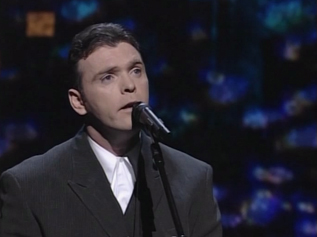
Eimear Quinn
Date: May 18, 1996
Venue: Oslo Spektum, Oslo, Norway
Presenters: Ingvild Bryn, Morten Harket
Orchestra: NRK orchestra
Conductor: Frode Thingnæs
Director: Pal Veiglum
Scruteneer: Christine Marchal-Ortiz
Host broadcaster: NRK
Price presenter: Rolf Løvland, Fionualla Sherry, Petter Skavlan
Interval act: Beacon Burning: video and dance act
Duration: 3 hours
Number of entries: 23
Debuting countries: -
Returning countries: Estonia, Finland, The Netherlands, Slovakia, Switzerland
Withdrawing countries: Denmark, Germany, Hungary, Israel, Russia
Winning Song: The Voice - Eimear Quinn, Ireland
Voting system: Each country awarded 12, 10, 8-1 points to their 10 favourite songs

Entries

01. Turkey: Şebnem Paker - Beşinci Mevsim (12th place, 57 points)
02. UK: Gina G - Ooh aah... just a little bit (8th place, 77 points)
03. Spain: Antonio Carbonell - ¡Ay, qué deseo! (20th place, 17 points)
04. Portugal: Lúcia Moniz - O meu coração não tem cor (6th place, 92 points)
05. Cyprus: Constantinos - Mono yia mas (9th place, 72 points)
06. Malta: Miriam Christine - In a woman's heart (10th place, 68 points)
07. Croatia: Maja Blagdan - Sveta ljubav (4th place, 98 points)
08. Austria: George Nussbaumer - Weil's dr guat got (10th place, 68 points)
09. Switzerland: Kathy Leander - Mon coeur l'aime (16th place, 22 points)
10. Greece: Mariana Efstratiou - Emeis Forame to Himona Anixiatika (14th points, 36 points)
11. Estonia: Maarja-Liis Ilus & Ivo Linna - Kaelakee hääl (5th place, 94 points)
12. Norway: Elisabeth Andreassen - I evighet (2nd, 114 points)
13. France: Dan Ar Braz & L'Héritage des Celtes - Diwanit bugale (19th place, 18 points)
14. Slovenia: Regina - Dan najlepših sanj (21st place, 16 points)
15. The Netherlands: Maxine & Franklin Brown - De eerste keer (7th place, 78 points)
16. Belgium: Lisa Del Bo - Liefde is een kaartspel (16th place, 22 points)
17. Ireland: Eimear Quinn - The voice (1st place, 162 points)
18. Finland: Jasmine - Niin kaunis on taivas (23rd place, 9 points)
19. Iceland: Anna Mjöll - Sjúbídú (13th place, 51 points)
20. Poland: Kasia Kowalska - Chcę znać swój grzech... (15th place, 31 points)
21. Bosnia & Herzegovina: Amila Glamočak - Za našu ljubav (22nd place, 13 points)
22. Slovakia: Marcel Palonder - Kým nás máš (18th place, 19 points)
23. Sweden: One More Time - Den vilda (3rd place, 100 points)

Franklin Brown & Maxine

The Eurovision Song Contest 1996 was the 41st Eurovision Song Contest and was held on May 18 1996 in Oslo Spektrum in Oslo, Norway. The presenters were Ingvild Bryn and Morten Harket. Morten Harket, lead singer of A-ha, opened the show with a performance of his single Heaven's Not For Saints. Eimear Quinn of Ireland was the winner of this Eurovision with the song, The Voice. The song was written by Brendan Graham, who also composed the 1994 winner Rock 'n' Roll Kids. It was also a record seventh win for Ireland.

Format

The European Broadcasting Union continued to experiment in their efforts to find a broadly acceptable method of whittling down the large number of potential participating countries to a more realistic figure. This year, they reverted to the pre-qualifying round that had been used for the 1993 contest, but this time with just one country exempt from the process - the host Norway. The pre-qualifier was an oddity in that it was not broadcast in any form, and did not even entail any live performance of the entries. Instead, the traditional set of national juries simply listened to the studio recordings of the 29 participating songs, through audio tapes, and awarded points accordingly. All that was subsequently revealed of their deliberations was which countries had qualified, with the precise scores and placings remaining under wraps (although they were leaked some time later). The 22 best scoring countries went on to participate at the ESC in Oslo.

Maja Blagdan

It rapidly became evident that this system was no more sustainable than any other the EBU had tried, as it meant that several countries had gone through their traditional full-blown national selection procedure to come up with an entry, only to suffer the anti-climax of having their challenge quietly extinguished without even having had the opportunity of presenting the song to an international audience. As a leading financial contributor to the contest, Germany were particularly aggrieved that their entry, the techno song Planet of Blue performed by Leon, was one of the seven cast aside. It was the only year in the history of the ESC in which Germany did not participate in the final.

The 1996 contest also featured two novelties — which similarly failed to become a tradition — firstly a short 'good luck message' for each entry, recorded by a political leader or official from their country. The seniority of the figure who delivered the message varied wildly from country to country, ranging from Presidents and Prime Ministers on one end of the spectrum to junior ministers or ambassadors on the other, but a few very significant European political figures did appear, including long-serving Swedish premier Göran Persson and President Alija Izetbegović of Bosnia and Herzegovina. But of course the only good luck wish that was fully rewarded in the end was that of Irish Taoiseach John Bruton, who introduced the song that took his country to a fourth win in five years.

Secondly, the voting section was conducted using blue screen virtual reality technology provided by Silicon Graphics. The host Ingvild Bryn introduced the viewers to the 'blue room', upon which a 3D scoreboard, views of the green room, the jury spokespersons and country graphics appeared. The only physical aspects were Ingvild herself and two podiums.

Maarja-Liis Ilus & Ivo Linna

It seems that a national final was held in 1996 for Federal Republic of Yugoslavia, which was won by Maja Odzaklijevska. Maja Odzaklijevska won the Festival MESAM 1996 with the song Rastanak but this festival existed since 1983 and the only common point with Beovizij (Serbian national final) is that the festival used to be organised in the Sava Centar (the biggest congress hall in Belgrade). However RTS considered Maja to be their Eurovision Representative. But, due to ongoing sanctions, the country was unable to enter. Bulgaria, at some stage, wanted to participate as well but they withdrew eventually.

Voting

When Belén Fernández de Henestrosa, the Spanish spokesperson, announced the votes of the Spanish jury, she awarded six points to Holland (the Netherlands), which host Ingvild Byrn misheard as Poland. The official results table corrected this error, and the Netherlands' seventh place result was restored at the expense of the United Kingdom, who ultimately finished eighth. Norway's entry, I evighet, is notable for being the only runner-up not to receive a single 12 points score in a Eurovision final since the current voting method was introduced in 1975.

Returning artists

Two artists returned to the contest this year. Mariana Efstratiou represented Greece in 1987 as a backing vocalist, and in 1989. Elisabeth Andressen represented Sweden in 1982 and Norway in 1985 and 1994.

Lúcia Moniz

Pre-qualifying round

Date: March, 20/21 1996
Location: all participating countries
Participating countries: 29

01. Austria: George Nussbaumer - Weil'n dr guat got (6th place, 80 points)
02. Belgium: Lisa Del Bo - Liefde is een kaartspel (12th place, 45 points)
03. Bosnia & Herzegovina: Amila Glamočak - Za našu ljubav (21st place, 29 points)
04. Croatia: Maja Blagdan - Sveta ljubav (19th place, 30 points)
05. Cyprus: Constantinos - Mono yia mas (15th place, 42 points)
06. Denmark: Dorthe Andersen & Martin Loft - Kun med dig (25th place, 22 points)
07. Estonia: Maarja-Liis Ilus & Ivo Linna - Kaelakee hääl (5th place, 106 points)
08. Finland: Jasmine - Niin kaunis on taivas (22nd place, 28 points)
09. France: Dan Ar Braz & L'Héritage des Celtes - Diwanit bugale (11th place, 55 points)
10. Germany: Leon - Planet of blue (24th place, 24 points)
11. Greece: Mariana Efrstratiou - Emeis Forame to Himona Anixiatika (12th place, 45 points)
12. Hungary: Gjon Delhusa - Fortuna (23rd place, 26 points)
13. Iceland: Anna Mjöll - Sjúbídú (10th place, 59 points)
14. Ireland: Eimear Quinn - The voice (2nd place, 198 points)
15. Israel: Galit Bell - Shalom olam (28th place, 12 points)
16. F.Y.R. Macedonia: Kalipi - Samo ti (26th place, 14 points)
17. Malta: Miriam Christine - In a woman's heart (4th place, 138 points)
18. The Netherlands: Maxine & Franklin Brown - De eerste keer (9th place, 63 points)
19. Poland: Kasia Kowalska - Chcę znać swój grzech... (15th place, 42 points)
20. Portugal: Lúcia Moniz - O meu coração não tem cor (18th place, 32 points)
21. Romania: Monica Anghel & Sincron - Rugă pentru pacea lumii (29th place, 11 points)
22. Russia: Andrej Kosinskij - Ja eto ja (26th place, 14 points)
23. Slovakia: Marcel Palonder - Kým nás máš (17th place, 36 points)
24. Slovenia: Regina - Dan najlepših sanj (19th place, 30 points)
25. Spain: Antonio Carbonell - ¡Ay, qué deseo! (14th place, 43 points)
26. Sweden: One More Time - Den vilda (1st place, 227 points)
27. Switzerland: Kathy Leander - Mon coeur l'aime (8th place, 67 points)
28. Turkey: Şebnem Paker - Beşinci Mevsim (7th place, 69 points)
29. UK: Gina G - Ooh aah... just a little bit (3rd place, 153 points)

Thursday, 4 October 2012

Nylon Beat

 Nylon Beat

Nylon Beat was a Finnish pop band that was very popular during 1990s and the beginning of the 2000s, consisting of the girl duo Jonna Kosonen and Erin Koivisto. They received eight gold and seven platinum records and the Band of the Year 1999 Emma award during their active career, which was between 1995–2003.

The band was formed in 1995 as a result of TV show Kiitorata. By the time both girls were only 16 years old. They started with backup tracks and dancers. Later their music matured somewhat and finally they performed fully live with a real band consisting of several professional musicians. Most of the music was written by Risto Asikainen and Ilkka Vainio, the production mostly done by Risro Asikainen.

Other artists have covered Nylon Beat songs, most notably popular Korean pop group S.E.S.

Although the duo nominally had already given their final concert on New Year's Eve 2003, they reformed again to perform as a warming act for two Toto gigs: the first was on August 17, 2007 in Oulu and the second on August 18, 2007 in Tampere.

Nylon Beat participated twice in the Finnish national final for the ESC. Before coming 5th in 2000 with Viha ja rakkaus, they came 3rd in 1998 with the song Umm ma ma.

Monday, 1 October 2012

Eurovision Song Contest 1995

 Secret Garden

Date: May 13, 1995
Venue: Point Theatre, Dublin, Ireland
Presenter: Mary Kennedy
Orchestra: RTÉ Concert orchestra
Conductor: Noel Kelehan
Director: John Comiskey
Scruteneer: Christian Clausen
Host broadcaster: RTÉ
Price presenter: Paul Harrington & Charlie McGettigan
Interval act: Micheal O' Suilleabhain & The Monks From Glenstal Abbey with Lumen
Duration: 2 hours, 51 minutes
Number of entries: 23
Debuting countries: -
Returning countries: Belgium, Denmark, Israel, Slovenia, Turkey
Withdrawing countries: Estonia, Netherlands, Finland, Lithuania, Romania, Slovakia, Switzerland
Winning Song: Nocturne - Secret Garden, Norway
Voting system: Each country awarded 12, 10, 8-1 points to their 10 favourite songs

Eddie Friel

Entries

01. Poland: Justyna - sama (18th place, 15 points)
02. Ireland: Eddie Friel - Dreamin'(14th place, 44 points)
03. Germany: Stone & Stone - Verliebt in dich (23rd place, 1 points)
04. Bosnia & Herzegovina: Davorin Popović - Dvadeset prvi vijek (19th place, 14 points)
05. Norway: Secret Garden - Nocturne (1st place, 148 points)
06. Russia: Philipp Kirkorov - Kolibelnaya dlya vulkana (17th place, 17 points)
07. Iceland: Bo Halldórsson - Núna (15th place, 31 points)
08. Austria: Stella Jones - Die Welt dreht sich verkehrt (13th place, 67 points)
09. Spain: Anabel Conde - Vuelve Conmigo (2nd place, 119 points)
10. Turkey: Arzu Ece - Sev (16th place, 21 points)
11. Croatia: Magazin & Lidija - Nostalgija (6th place, 91 points)
12. France: Nathalie Santamaria - Il me donne rendez-vous (4th place, 94 points)
13. Hungary: Csaba Szigeti - Új név a régi ház falán (22nd, 3 points)
14. Belgium: Frédéric Etherlinck - La voix est libre (20th place, 8 points)
15. UK: Love City Groove - Love City Groove (10th place, 76 points)
16. Portugal: Tó Cruz - Baunilha e chocolate (21st place, 5 points)
17. Cyprus: Alexandros Panayi - Sti fotia (9th place, 79 points)
18. Sweden: Jan Johansen - Se på mig (3rd place, 100 points)
19. Denmark: Aud Wilken - Fra Mols til Skagen (5th place, 92 points)
20. Slovenia: Darja Švajger - Prisluhni mi (7th place, 84 points)
21. Israel: Liora - Amen (8th place, 81 points)
22. Malta: Mike Spiteri - Keep me in mind (10th place, 76 points)
23. Greece: Elina Konstantopoulou - Pia prosefhi (12th place, 68 points)  

Anabel Conde

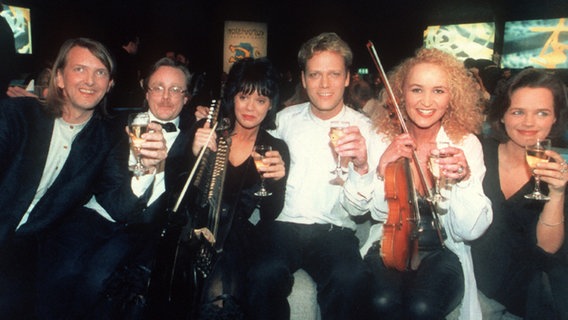
The Eurovision Song Contest 1995 was the 40th Eurovision Song Contest and was held on May 13 1995 in the Point Theatre in Dublin, Ireland. The presenter was Mary Kennedy. To date, this year's competition was also the last one with only one host. This contest broke the chain of victories that Ireland enjoyed in 1992, 1993, and 1994. This was Ireland's 3rd year in succession to host the contest - and to mark the 40th show, it was opened with a 4-minute retrospective showing images from the contest's history. The Norwegian group Secret Garden was the winner of this contest with the mostly instrumental song, Nocturne. Incidentally, Secret Garden's violinist was Fionnuala Sherry, who is Irish. Nocturne was written by Rolf Løvland

The song is noted for its relative absence of lyrics - with only 24 words being sung in the original Norwegian version and much of the rest of the song being given over to a violin intermezzo performed by Irish musician Fionnuala Sherry.

While no other victorious song has featured so few words, Finland would go on to place 15th in the 1998 Contest with Aava, which contains only six words repeated throughout the song. The previous holder of the record of shortest lyrics in Eurovision history was Belgium and their 1983 entry Rendez-vous, with a total of 11 words.

Jan Johansen

Format

After winning the 1994 contest, RTÉ were worried about whether they could afford to host a third consecutive contest in 1995. The BBC had offered to take on the responsibility of hosting the contest, and had even proposed that the contest be staged as a joint production in Belfast, capital of Northern Ireland. In the end RTÉ decided to stage the contest on its own. However they did ask the EBU that, should Ireland win once more, that they would not be expected to host the event for a fourth year in a row.

Video montage commemorating the history of the Eurovision Song Contest for its 40th edition was shown at the opening of the contest.

The stage was designed by Alan Farquharson who also designed the Millstreet 1993 set. Although it was quite dark and often gloomy in appearance, it did form the basis for a spectacular opening whereby a giant screen rotated to reveal the presenter who descended a stairway which ultimately disappeared to allow for the arrow shaped stage to come together amid fireworks. The interval act consisted of several well known Irish performers including Clannad, Brian Kennedy (who would go on to actually represent Ireland 11 years later), and was composed by leading musician Michael O'Suilleabhan.

Darja Švajger

Two of Ireland's winners attended the contest; Dana, who was Ireland's first winner, winning the contest in 1970 with All Kinds of Everything, and Mr Eurovision himself, Johnny Logan, winning the contest as a singer in 1980 and 1987, and also for writing Linda Martin's 1992 winning song Why Me?. It was his birthday that night, but according to host Mary Kennedy, He wouldn't say which one! Nonetheless, the audience sang Happy Birthday for him, assisted by the orchestra.

The favourite to win the contest, according to bookmakers, was Sweden with the pop-ballad Se på mej. Other countries in contention for the win were Denmark, Israel, Spain, and the eventual winner, Norway. The winning song was something new at Eurovision in that it contained only 24 words accompanied by long violin solos. The United Kingdom contributed a modern rap number, while the previous year’s runner-up, Poland, went for something that completely contrasted with their début entry.

After the voting was completed, Norway was the winner with 148 points, followed by Spain's Vuelve Conmigo with 119 points, and Sweden gaining 100 points

Aud Wilken

Participating counties

The EBU decreased the number of participants back to 23 to make sure the show wouldn't last longer than 3 hours. 5 of the 6 countries that were relegated the previous year came back to the contest, Luxembourg decided to stop participating completely and Italy withdrew voluntarily, as in 1994.

There was much speculation in Ireland as to whether RTÉ had deliberately chosen a song perceived as not having a good chance of winning in order to avoid hosting the contest for a fourth time in a row - although this was never verified. This rumour did, however inspire a popular episode of Father Ted. In any event, RTÉ ended up hosting the contest once again in 1997.

Returing artists

There was only one returning artists in 1995. Arzu Ece was a member of the group Pan, who sang the Turkish entry Bana bana in 1989.


Sunday, 30 September 2012

Eurovision Song Contest 1994


Paul Harrington and Charlie McGettigan

Date: April 30, 1994
Venue: Point Theatre, Dublin, Ireland
Presenters: Cynthia Ní Mhurchú, Gerry Ryan
Orchestra: RTÉ Concert orchestra
Conductor: Noel Kelehan
Director: Patrick Cowap
Scruteneer: Christian Clausen
Host broadcaster: RTÉ
Price presenter: Niamh Kavanagh
Interval act: Riverdance
Duration: 3 hours, 3 minutes
Number of entries: 25
Debuting countries: Estonia, Hungary, Lithuania, Poland. Romania, Russia, Slovakia
Returning countries: -
Withdrawing countries: Belgium, Denmark, Israel, Italy, Luxembourg, Slovenia, Turkey
Winning Song: Rock'n'Roll Kids - Paul Harrington and Charlie McGettigan, Ireland
Voting system: Each country awarded 12, 10, 8-1 points to their 10 favourite songs

MeKaDo

Entries

01. Sweden: Marie Bergman & Roger Pontare - Stjärnorna (13th place, 48 points)
02. Finland: CatCat - Bye bye baby (22nd place, 11 points)
03. Ireland: Paul Harrington and Charlie McGettigan - Rock'n'Roll kids (1st place, 226 points)
04. Cyprus: Evridiki - Íme ánthropos ki egó (11th place, 51 points)
05. Iceland: Sigga - Nætur (12th place, 49 points)
06. UK: Francess Ruffelle - We will be free (Lonely Symphony) (10th place, 63 points)
07. Croatia: Tony Cetinski - Nek'ti bude ljubav sva (16th place, 27 points)
08. Portugal: Sara Tavares - Chamar a música (8th place, 73 points)
09. Switzerland: Duilio - Sto pregando (19th place, 15 points)
10. Estonia: Silvi Vrait - Nagu merelaine (24th place, 2 points)
11. Romania: Dan Bittman - Dincolo de nori (21st place, 14 points)
12. Malta: Chris & Moira - More than love (5th place, 97 points)
13. The Netherlands: Willeke Alberti - Waar is de zon (23rd place, 4 points)
14. Germany: MeKaDo - Wir geben 'ne Party (3rd place, 128 points)
15. Slovakia: Tublatanka - Nekonečná pieseň (19th place, 15 points)
16. Lithuania: Ovidijus Vyšniauskas - Lopšinė mylimai (25th place, 0 points)
17. Norway: Elisabeth Andreassen & Jan Werner Danielsen - Duett (6th place, 76 points)
18. Bosnia & Herzegovina: Alma & Dejan - Ostani kraj mene (15th place, 39 points)
19. Greece: Kostas Bigalis & the Sea Lovers - To trehandiri (14th place, 44 points)
20. Austria: Petra Frey - Für den Frieden der Welt (17th place, 19 points)
21. Spain: Alejandro Abad - Ella no es ella (18th place, 17 points)
22. Hungary: Friderika Bayer - Kinek mondjam el vétkeimet? (4th place, 122 points)
23. Russia: Youddiph - Vechny strannik (9th place, 70 points)
24. Poland: Edyta Górniak - To nie ja! (2nd place, 166 points)
25. France: Nina morato - Je suis un vrai garçon (7th place, 74 points)

Willeke Alberti

The Eurovision Song Contest 1994 was the 39th Eurovision Song Contest and was held on April 30 1994 in the Point Theatre in Dublin, Ireland. The presenters were Cynthia Ní Mhurchú and Gerry Ryan. The pair hosted the evening in French, English and Irish. Paul Harrington and Charlie McGettigan from Ireland were the winners of this Eurovision with a song written by Brendan Graham, Rock 'N' Roll Kids. This was a record sixth victory for Ireland, giving it the outright record number of victories at the Eurovision Song Contest. It was also the first time — and to date the only time — that the contest had been won by the same country in three consecutive years.

Format

The contest opened with a brief film of stars floating in water, fireworks and caricatures dancing around, drinking coffee and biking. The cameras then went live to the venue itself, where dancers dressed in white and wearing caricatured heads of well-known Irish figures, arrived on stage carrying European countries’ flags. The presenters entered the stage spectacularly from a bridge which descended from the roof of the theatre. This year’s video postcards had a literary theme, showing contestants reading, fishing and doing other activities around Ireland. The stage, by Paula Farrell, was four times larger than the Millstreet stage, and its design which included a city scene of skyscrapers and video screens plus a backdrop of an ever changing nightsky was based upon the concept of what a futuristic Dublin might look like with one remaining constant being the river Liffey. Indeed, the floor was painted with a dark blue reflective paint to give a watery effect.

Edyta Górniak

Poland took part for the first time and caused a scandal when Edyta Górniak broke the rules by singing her song in English during the dress rehearsal (which is shown to the juries who selected the winner until 1997). Only six countries demanded that Poland should be disqualified, though the rules required 13 countries to complain before Poland could be removed from the competition. The proposed removal did not occur and Poland went on to come 2nd in the contest, the highest placing that any country's debut song had ever achieved (even the winner in 1956 was Switzerland's second song of the night).

Participating countries

To cope with the increasing number of countries wishing to participate in the contest, for 1994 the European Broadcasting Union ruled that the five lowest-placed countries from the preceding year's contest would not participate. This meant that Belgium, Denmark, Israel, Slovenia and Turkey did not participate this year opening spaces for the overwhelming amount of new countries. This contest also saw Luxembourg withdraw from Eurovision indefinitely. Because Italy and Luxembourg withdrew voluntarily, the bottom 6 of the 1993 Contest were actually relegated.

 CatCat

Interval act

The interval act was the first ever performance of the Irish dancing spectacular Riverdance, featuring Michael Flatley and Jean Butler. Although the costs of producing the 1994 contest was only half of what the previous year cost, the success of Riverdance ensured that is was by far the most commercially successful Eurovision ever.

Voting

For the first time in Eurovision history, voting was done via satellite instead of by telephone, and as a result, viewers could actually see the spokespersons onscreen.

When the voting started, Hungary took the lead from the first six juries and was well ahead of all the other countries. However, Ireland powered their way through the score board ending up the winners with a 60 point lead over second-placed Poland.

Sara Tavares

Returning artists

There were four returning artists in 1994. Evridiki represented Cyprus in 1992, Sigga was in 1990 a member of Stjórnin in 1990 and a member of Heart 2 Heart in 1992, Elisabeth Andreassen represented Sweden in 1982 as a member of Chips and in 1985 she represented Norway as a member of Bobbysocks! and Marie Bergman represented Sweden in 1971 and 1972.


Saturday, 29 September 2012

Eurovision Song Contest 1993

 Niamh Kavanagh

Date: May 15, 1993
Venue: Green Glens Arena, Millstreet, Ireland
Presenter: Fionnuala Sweeney
Orchestra: RTÉ Concert orchestra
Conductor: Noel Kelehan
Director: Anita Notaro
Scruteneer: Christian Clausen
Host broadcaster: RTÉ
Price presenter: Linda Martin
Interval act: Linda Martin & Johnny Logan
Duration: 3 hours, 2 minutes
Number of entries: 25
Debuting countries: Bosnia & Herzegovina, Croatia, Slovenia
Returning countries: -
Withdrawing countries: Yugoslavia
Winning Song: In Your Eyes - Niamh Kavanagh, Ireland
Voting system: Each country awarded 12, 10, 8-1 points to their 10 favourite songs

Entries

01. Italy: Enrico Ruggieri - Sole d'Europa (12tg place, 45 points)
02. Turkey: Burak Aydos - Esmer yarim (21st place, 10 points)
03. Germany: Münchener Freiheit - Viel zu weit (18th place, 18 points)
04. Switzerland: Annie Cotton - Moi, tout simplement (3rd place, 148 points)
05. Denmark: Tommy Seebach Band - Under stjernerne på himlen (22nd place, 9 points)
06. Greece: Katerina Garbi - Ellada, chora tou fotos (9th place, 64 points)
07. Belgium: Barbara Dex - Iemand als jij (25th place, 3 points)
08. Malta: William Mangion - This time (8th place, 69 points)
09. Iceland: Inga - Þá veistu svarið (13th place, 42 points)
10. Austria: Tony Wegas - Maria Magdalena (14th place, 32 points)
11. Portugal: Anabela - A cidade (até ser dia) (10th place, 60 points)
12. France: Patrick Fiori - Mama Corsica (4th place, 121 points)
13. Sweden: Arvingarna - Eloise (7th place, 89 points)
14. Ireland: Niamh Kavanagh - In your eyes (1st place, 187 points)
15. Luxembourg: Modern Times - Donne-moi une chance (20th place, 11 points)
16. Slovenia: 1X Band - Tih deževen dan (22nd place, 9 points)
17. Finland: Katri Helena - Tule luo (17th place, 20 points)
18. Bosnia & Herzegovina: Fazla - Sva bol svijeta (16th place, 27 points)
19. UK: Sonia - Better the devil you know (2nd place, 164 points)
20. The Netherlands: Ruth Jacott - Vrede (6th place, 92 points)
21. Croatia: Put - Don't ever cry (15th place, 31 points)
22. spain: Tih deževen dan - Hombres (11th place, 58 points)
23. Cyprus: Zimboulakis & Van Beke - Mi stamatas (19th place, 17 points)
24. Israel: The Shiru Group - Shiru (24th place, 4 points)
25. Norway: Silje Vige - Alle mine tankar (5th place, 120 points)

 Tony Wegas

The Eurovision Song Contest 1993 was the 38th Eurovision Song Contest and was held on May 15 1993 in Millstreet, County Cork, Ireland. The presenter was Fionnuala Sweeney. Niamh Kavanagh was the winner of this Eurovision for Ireland with the song In Your Eyes which was written by Jimmy Walsh. This was Ireland's fifth victory, and equalled the tally of five Eurovision victories achieved by France in 1977 and Luxembourg in 1983. In Your Eyes was the best selling single in Ireland for 1993. It also reached No. 24 in the United Kingdom weekly pop charts.

Format

The location for this year's edition of the contest was unique, in that Millstreet, with a population at the time of just 1,500 people, was the smallest host town ever chosen for Eurovision, and indeed was the most remote. However, the venue, a large indoor well- equipped equestrian centre was deemed more than suitable as the location by RTÉ. With huge support from local and national authorities, plus several businesses in the region, the town's infrastructure was greatly enhanced in order to accommodate an event of this scale. It was also the largest outside broadcast ever attempted by state broadcaster RTÉ and was deemed a technical triumph for all involved. The stage was created by Alan Farquharson, who was also chief production designer two years later in Dublin.

Barbara

BBC newsreader Nicholas Witchell caused controversy by remarking on the air, shortly before the contest, that it would be held in a cowshed in Ireland. He subsequently apologized.

The top two countries of this contest were the same as the top two countries in the previous year's contest, being Ireland and the United Kingdom.

Voting

The voting required a jury to deliberate in the midst of the on-going war in Bosnia and Herzegovina. Warm applause rang round the hall as a voice on a crackling phone line was heard to deliver the familiar greeting, "Hello Millstreet, Sarajevo calling".

During the announcement of the scores by the Dutch jury, Sweeney got carried away with the audience's cheers and declared Ireland 12 points when they had only been awarded 10 - which was promptly corrected.

 Ruth Jacott

By the final few juries it became clear that either Ireland or the United Kingdom were going to win. After the penultimate jury had voted, it looked to be a lost cause for second-placed Sonia of the UK as she was eleven points behind Niamh Kavanagh.

Due to earlier technical difficulties, the final jury to announce their results was the Maltese jury. An expectant Irish crowd waited to hear Malta award anything between one and ten points to either the UK or Ireland - the result of which would have made it arithmetically impossible for Ireland to be caught. However, the name of neither country came up (the ten points instead surprisingly being awarded to Luxembourg). This of course meant that either the UK or Ireland must have failed to pick up any points from the final jury, and if it was Sonia that received the maximum twelve points, the seemingly impossible would have happened and the UK would snatch a single-point victory at the death. Instead it was Ireland that were awarded the final points of the evening, finishing with what looked in retrospect a comfortable twenty-three point victory.

Returning artists

Tony Wegas represented Austria in 1992, Tommy Seebach did the same for Denmark in 1979 and 1981 and Katri Helena represented Finland in 1979.

Patrick Fiori

Pre-qualifying round

In the run-up to this contest, the European Broadcasting Union finally started to grapple with the explosion in the number of potential participating countries, caused by the dissolution of the Eastern bloc, and also by the disintegration of Yugoslavia, which had traditionally been the only communist country that took part in the contest. For the first time, then, a pre-qualifying round was introduced, but only for countries that had either never participated in the contest at all, or in the case of former republics of Yugoslavia, had not previously competed as nations in their own right. This was, however, merely a 'sticking-plaster' measure that was plainly not a sustainable solution for future years, as it would not be seen as remotely equitable. But in the meantime, Croatia, Bosnia and Herzegovina, Hungary, Slovenia, Slovakia, Romania and Estonia were left to battle it out in a special competition called Kvalifikacija za Millstreet in Ljubljana on April 3 for the mere three places available at the grand final in Millstreet. After some extremely tight voting, Bosnia and Herzegovina, Croatia and Slovenia edged through.

Date: April 3, 1993
Venue: RTV SLO Studio 1, Ljubljana, Slovenia
Presenter: Tajda Lekše
Conductors: Petar Ugrin, Mojmir Sepe
Director: Peter Juratovec
Host broadcaster: RTV SLO
Number of entries: 7
Winning songs: Tih deževen dan - 1X Band, Slovenia; Sva bol svijeta - Fazla, Bosnia & Herzegovia; Don't ever cry - Put, Croatia
Voting system: Each country awarded 12, 10, 8-5 points to each song

 Tajda Lekše

Entries

01. Bosnia & Herzegovina: Fazla - Sva bol svijeta (2nd place, 52 points)
02. Croatia: Put - Don't ever cry (3rd place, 51 points)
03. Estonia: Janika Sillamaa - Muretut meelt ja südametuld (5th place, 47 points)
04. Hungary: Andrea Szulák - Árva reggel (6th place, 44 points)
05. Romania: Dida Drăgan - Nu pleca (7th place, 38 points)
06. Slovenia: 1X Band - Tih deževen dan (1st place, 54 points)
07. Slovakia: Elán - Amnestia na neveru (4th place, 50 points)

After the seven competing songs the juries made their final results. From the seven competing countries, the former Yugoslav nations of Bosnia and Herzegovina, Croatia and Slovenia qualified for Eurovision 1993, which was held on 15 May 1993 in Millstreet, Ireland. Because of the new relegation system that had been introduced to Eurovision, all seven countries would be eligible to take part in the 1994 contest.

Eurovision Song Contest 1992

Linda Martin

Date: May 9, 1992
Venue: Malmö Isstadion, Malmö, Sweden
Presenters: Lydia Cappolicchio, Harald Treutiger
Orchestra: Anders Berglund orchestra
Conductor: Anders Berglund
Director: Kage Gimtell
Scruteneer: Frank Naef
Host broadcaster: SVT
Price presenter: Carola
Interval act: A Century of Dance
Duration: 3 hours, 10 minutes
Number of entries: 23
Debuting countries: -
Returning countries: The Netherlands
Withdrawing countries: -
Winning Song: Why me - Linda Martin, Ireland
Voting system: Each country awarded 12, 10, 8-1 points to their 10 favourite songs

Michael Ball

Entries

01. Spain: Serafin Zubiri - Todo esto es la música (14th place, 37 points)
02. Belgium: Morgane - Nous, on veut des violons (20th place, 11 points)
03. Israel: Dafna Dekel - Ze rak sport (6th place, 85 points)
04. Turkey: Aylin Vatankoş - Yaz bitti (19th place, 17 points)
05. Greece: Cleopatra - Olou tou kosmou i elpida (5th place, 94 points)
06. France: Kali - Monté la riviè (8th place, 73 points)
07. Sweden: Christer Björkman - I morgon är en annan dag (22nd place, 9 points)
08. Portugal: Dina - Amor d'água fresca (17th place, 26 points)
09. Cyprus: Evridiki - Teriazoume (11th place, 57 points)
10. Malta: Mary Spiteri - Little child (3rd place, 123 points)
11. Iceland: Heart 2 Heart - Nei eða já (7th place, 80 points)
12. Finland: Pave Maijanen - Yamma, yamma (23rd place, 4 points)
13. switzerland: Daisy Auvray - Mister music man (15th place, 32 points)
14. Luxembourg: Marion Welter & Kontinent - Sou fräi (21st place, 10 points)
15. Austria: Tony Wegas - Zusammen geh'n (10th place, 63 points)
16. UK: Michael Ball - One step out of time (2nd place, 139 points)
17. Ireland: Linda Martin - Why me? (1st place, 155 points)
18. Denmark: Kenny Lübcke & Lotte Nilsson - Alt det som ingen ser (12th place, 47 points)
19. Italy: Mia Martini - Rapsodia (4th place, 111 points)
20. Yugoslavia: Extra Nena - Ljubim te pesmama (13th place, 44 points)
21. Norway: Merethe Trøan - Visjoner (18th, 23 points)
22. Germany: Wind - Träume sind für alle da (16th place, 27 points)
23. The Netherlands: Humphrey Campbell - Wijs me de weg (9th place, 67 points)

Humphrey Campbell

The Eurovision Song Contest 1992 was the 37th Eurovision Song Contest and was held on May 9 1992 in Malmö, Sweden. The presenters were Lydia Cappolicchio and Harald Treutiger. Linda Martin, representing Ireland, was the winner of this Eurovision with the song Why Me?. The song was written by Johnny Logan, who had won the 1980 contest as singer and the 1987 contest as singer/songwriter.

Format

The contest took place at the indoor ice arena of Malmö where the stage set was in the shape of a Viking ship's bow with a dragon in the centre and stars on each side. The opening sequence included women dressed in the Swedish colours of yellow and blue and twirling ribbons. The filmic postcard tradition was continued with clips based on each country. Last year's winner, Carola, appeared on stage in a white dress with sheer sleeves, a rhinestone collar and cuffs and sang All the reasons to live.

Merethe Trøan

This contest marked the last participation of the dismembering Yugoslavia which soon separated into independent nations, some of which attempted to participate in the 1993 contest.This year's final entry was chosen as the last representative for SFRY even though the participants in the local contest were only from a portion of its former lands.

After scoring second place consecutively (1988, 1989) and scoring some disappointing results (1990, 1991), the United Kingdom sent Michael Ball with the contemporary pop-song One Step Out Of Time, which was the hot favourite to win the contest. However, the Irish sent Linda Martin, who had the past experience of coming in 2nd place in the 1984 contest, but also paired up once again with Johnny Logan, who won the contest twice before. In the end, Ireland won the contest with a 16 point lead over the United Kingdom, starting the chain of Irish wins in the 1990s. Malta with Little Child, performed by Mary Spiteri, also scored very well coming in 3rd place with 123 points. This was the first time that the three highest-placed songs had all been in English. Sweden, the host country, finished 2nd last.

 Lotte Nilsson & Kenny Lübcke

Switzerland had to replace its original choice of entry, Soleil, soleil which was to have been performed by Géraldine Olivier. The song did not comply with some of the rules of the national selection contest and so, despite having won, it did not go to Malmö.

Returning artists

Four artists and one band returned to the contest this year. The German band Wind represented Germany in 1985 and 1987, Grétar Örvarsson and Sigga, members of Heart 2 Heart, represented Iceland in 1990 as members of the band Stjórnin, Linda Martin represented Ireland in 1984 and Mia Martini performed for Italy in 1977.

Thursday, 27 September 2012

Rian Ungerer

Rian Ungerer

Rian Ungerer is a singer from South Afrika who is quite popular in his country since his debut cd in 1997 which he recorded together with his brother. In 2002 Rian started his solo career. He released 4 albums. For his album Moet my nie vergeet nie he covered the Croatian entry for the ESC 2005.

Vukovi umiru sami, which is written by Franjo Valentić and Boris Novković, is a dramatic "Balkan Ballad", with Boris Novković describing the end of a relationship as he realises that "This love was a vision, this is not my time". The song is well-remembered for the backing singers' line of "Dunavom, Dunavom" ("Down the Danube, Down the Danube") immediately prior to the key change.